

gibbous
 2
8.8
2
8.8

- adjective
- /ˈɡɪbəs/
- Specialized
- The planet still lies far from Earth, so it remains relatively small in the eyepiece, and its gibbous phase changes slowly.
- gibbous moon
- gibbous phase
- gibbous disk
Examples
-
"At what point, viewed from the equator, does the gibbous moon appear?"
Fiction book (1993) -
On September 1, it shows a slightly gibbous disk with an apparent diameter of 20".
Academic text (2004) -
This is a waning gibbous.
-
Which isn't exactly full, just especially gibbous.
-
A telescope reveals a gibbous disk some 6" across on December 1.
Academic text (2006) -
On October 1, the planet appears 18.1" across and shows a 64%-lit gibbous phase.
Academic text (2005) -
But when I saw the clouds glowing faintly from the gibbous moon...
Fiction book (2000) -
As the darkness deepened around him, he gazed at the gibbous moon.
Fiction book (1992) -
The gibbous moon sat at zenith, flooding the landscape with pale, colorless light.
Fiction book (2002) -
We enjoyed a clear night walk under the bright, gibbous moon that lit up the path.
Synonyms

A moon that has more than half its face lit
Antonyms
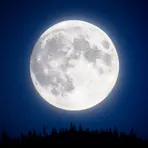
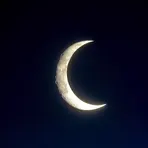
How Illuminated


Surface Forms
Morphology
gibbous = gibb + ous
Although formed from a root meaning 'hump' plus the adjectival suffix '-ous', the root 'gibb-' is not a standalone English word, so learners cannot reliably infer the astronomical meaning from the components.
Etymology
Gibbous comes from the Latin gibbus, which means 'hump', because a moon that is more than half lit looks like a rounded hump. So a gibbous moon is the 'humped' shape between a half moon and a full moon.