

giant chinkapin
- noun
- US
- The giant chinkapin is valued for its beautiful foliage and edible nuts.
Examples
-
The giant chinkapin tree can grow up to 30 feet tall.
-
They planted a giant chinkapin in the garden to attract wildlife.
-
Hikers along the Pacific Coast often spot the giant chinkapin growing in the wild.
-
I saw a beautiful giant chinkapin in the park.
-
The giant chinkapin is prized for its glossy leaves and delicious nuts.
-
Hikers along the Pacific Coast enjoy the sight of the giant chinkapin with its vibrant foliage.
-
In spring, the giant chinkapin produces small edible nuts that attract various birds.
Synonyms

A small evergreen tree with shiny yellow-green leaves and edible nuts
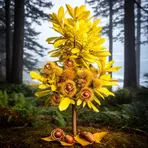
A small evergreen tree of the Pacific Coast with shiny yellow-green leaves and edible nuts
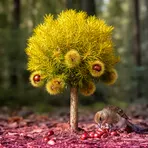
A small evergreen tree from the Pacific coast of North America with shiny yellow-green leaves and edible nuts
How Big


Surface Forms
Morphology
giant + chinkapin
The compound is a simple adjective + noun composition: 'giant' (very large) modifies 'chinkapin' (a type of tree), so the MWE means a large chinkapin tree and this meaning follows directly from the constituents. Such adjective–noun combinations are highly compositional and cross-linguistically common, so a B1 learner who knows both words would readily understand the phrase.
Etymology
The name giant chinkapin may come from an old Native American word for a small tree that makes chestnut-like 'edible nuts', and giant simply shows this type is larger. So the name gives the image of a bigger chinkapin tree with shiny leaves and nuts you can eat, which is why it refers to that evergreen tree.