
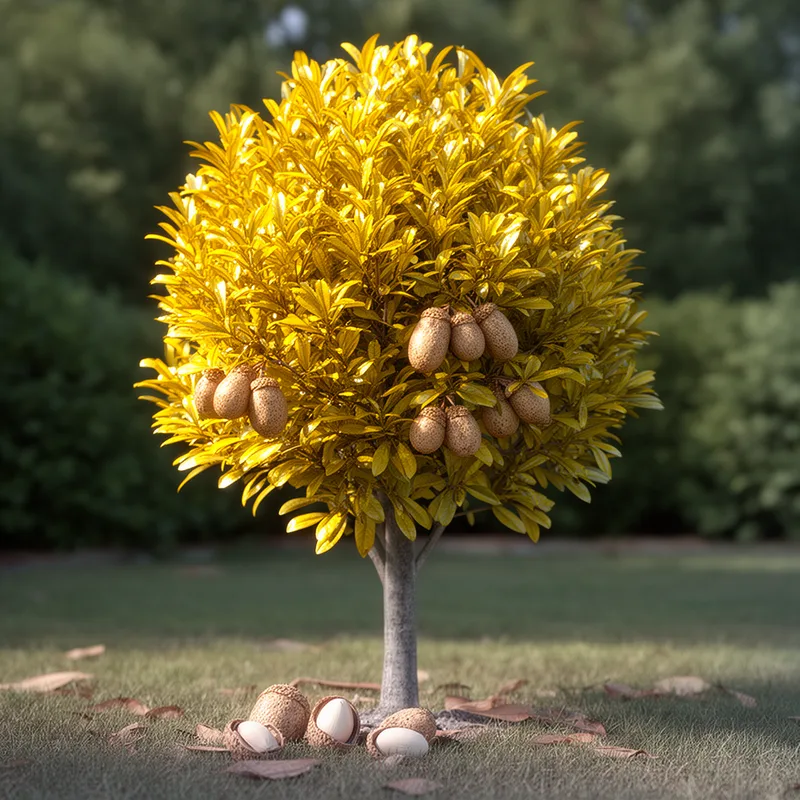
Castanopsis chrysophylla
- noun
- Specialized
- Botanists often study Castanopsis chrysophylla because of its unique golden leaves and edible nuts.
Examples
-
The garden features several Castanopsis chrysophylla that provide shade and beautiful foliage.
-
Local wildlife depends on the nuts produced by Castanopsis chrysophylla as a seasonal food source.
-
The Castanopsis chrysophylla tree thrives in coastal areas.
-
Many gardeners appreciate the Castanopsis chrysophylla for its beauty.
-
Many gardeners appreciate Castanopsis chrysophylla for its glossy yellow-green leaves and attractive form.
-
Local wildlife frequently forage on the edible nuts of Castanopsis chrysophylla during the fall.
-
The Castanopsis chrysophylla tree adds greenery to landscaping with its evergreen foliage year-round.
Synonyms

A small evergreen tree from the Pacific Coast with shiny yellow green leaves and edible nuts
A small evergreen tree from the Pacific Coast with shiny yellow-green leaves and edible nuts
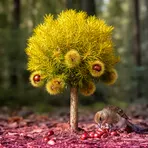
A small evergreen tree from the Pacific coast of North America with shiny yellow-green leaves and edible nuts
A small evergreen tree of the Pacific Coast with shiny yellow-green leaves and edible nuts
Surface Forms
Morphology
Castanopsis + chrysophylla
This is a scientific Latin binomial whose constituents are botanical/Greek‑Latin morphemes not part of everyday English; 'chrysophylla' is not a standard English word and has no dictionary gloss here. Even if a learner knows 'Castanopsis' as a genus, they would not be able to derive the specific meaning (a small evergreen with yellowish undersides and edible nuts) from these parts, so the expression is not transparently compositional for a B1 learner.
Etymology
Castanopsis chrysophylla comes from Greek and Latin roots: Castanopsis means 'chestnut-like' and chrysophylla means 'golden leaves'. So the name gives a clear picture of a small chestnut-like evergreen with yellow-gold leaves and edible nuts, which is why people use this name for the tree.

