

to get over
 65
3.4
65
3.4

- phrasal verb
- /ɡɛt ˈoʊvər/
- Can we just get this over with, please?
- Let's get over
- want to get it over
- just get it over
Loading YouTube…
Watch on YouTubeJust let's just get it over with right now.
- Just let's just get it over with right now.
- That's how I used to be with pressure is just like, I just want to get it over with.
- So if you understand, it's almost like lose the battle today, lose the battle today, get it over with.
Examples
-
"Just tell me and get it over with." "Oh, come on!"
Fiction book (2000) -
Do it and get it over with; settle your affairs here in the jungle.
Fiction book (1993) -
- Might as well get it over with now.
-
- Just go and get it over with.
-
"Sure, Joe," I said, thinking to myself, "Might as well get this over with."
Fiction book (2002) -
Tactical instinct: if it had to be done, do it and get it over with.
Fiction book (1993) -
If you're planning on asking me out, you might as well get it over with.
Fiction book (1999) -
Hadley decided to tell the whole story and get it over with.
Fiction book (1993) -
Listen, I saw Boyett leave, so let's get this over with before he comes back.
-
After finishing the difficult exam, she was relieved to finally get over it.
Synonyms
 249
3.9
249
3.9
To finish an unpleasant task quickly so you do not worry about it
 226
3.0
226
3.0
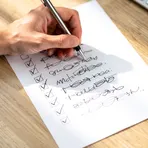
Finish an activity or task
 190
2.0
190
2.0
To complete an activity or task
 134
2.8
134
2.8
To finish a task you need to do
 128
3.3
128
3.3
To finish a difficult or long task
 31
2.5
31
2.5
To complete the last part of a task

 1
5.3
1
5.3
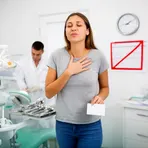
To finish something unpleasant so you stop worrying
Antonyms


How Complete

Surface Forms
Morphology
The sense 'to travel across / pass over' is a straightforward composition of a motion verb get (move/arrive) plus the particle/adverb over (across/on the other side). Although the provided single-word definitions list less relevant senses, a B1 learner who knows the common motion sense of 'get' and the spatial sense of 'over' will readily infer the MWE meaning, so it is transparent.
Etymology
Get over has the simple picture of moving a problem past a hard step; when you get the difficult part over, you finish it and can move on, so it means 'to finish dealing with an unpleasant or necessary task'.