
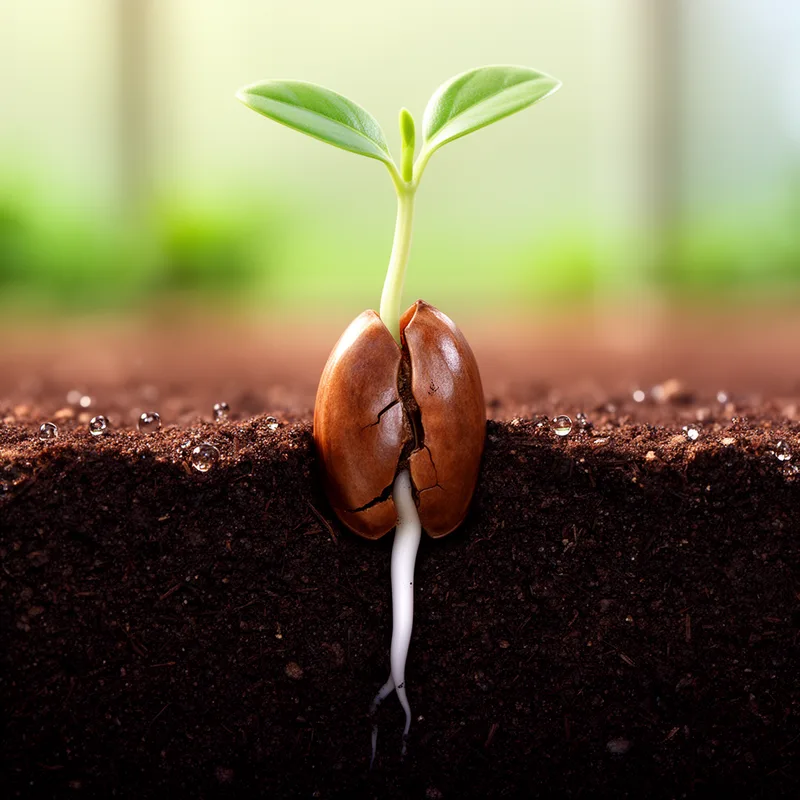
germinant
- noun
- /ˈdʒɜːrmɪnənt/
- Specialized
- The gardener noticed the small germinants emerging from the soil after a week of planting.
Examples
-
Farmers often evaluate germinants to determine the best conditions for seed growth.
-
All necessary equipment is portable, and the germinants can easily be warmed with a small portable incubator or a hand warmer.
Academic text (2006) -
At 37°C, as germination time increased, more Bt spores became vegetative cells with any type of germinant.
Academic text (2006) -
L-alanine was used as a germinant during the study (data not shown) since it had been reported that L-alanine could initiate germination of B. anthracis (Ireland & Hanna, 2002).
Academic text (2006) -
After several days of moisture and warmth, the germinants started to sprout in the greenhouse.
Synonyms

 62
1.8
62
1.8

A young shoot on a plant that grows from a seed
 20
2.8
20
2.8
A young plant that grows from a seed before it has adult leaves
How Sprouted

Surface Forms
Morphology
germinant = germinate (transparent) = germin + ant
The noun sense is a deverbal nominal use of 'germinate' + '-ant' meaning 'one/thing that is beginning to grow', which is directly inferable from the verb.
Etymology
Germinant comes from the root germin- meaning 'sprout', like in germinate. A germinant is a seed, spore, or bud that is beginning to grow.