
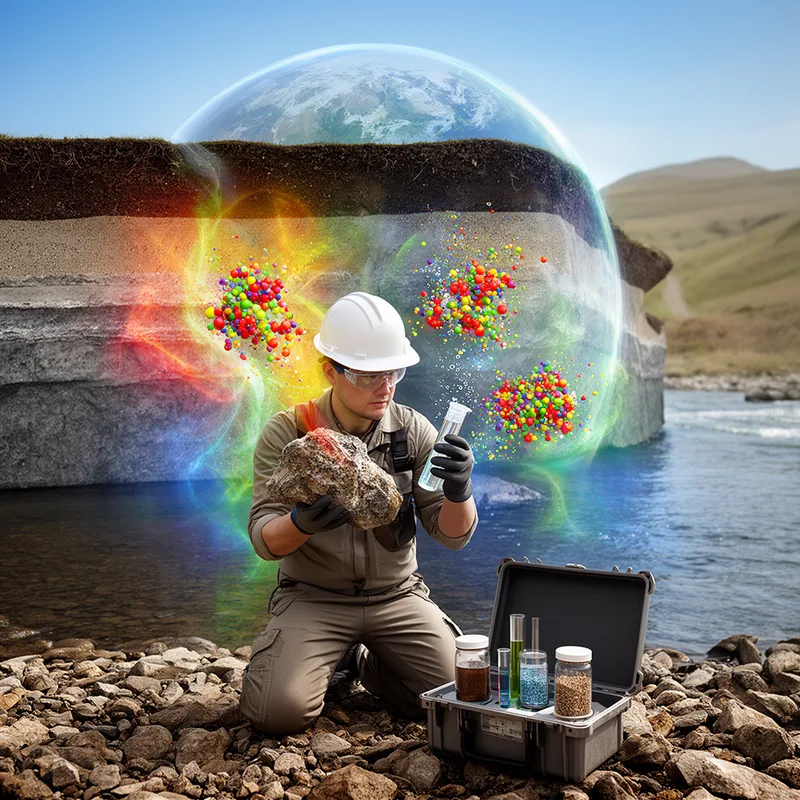
geochemical
 1
6.5

- adjective
- /ˌdʒiːoʊˈkɛmɪkəl/
- Specialized
- The robotic explorer is designed to map underwater caves, measure geochemical properties of the water, search for microbes and other life forms, and bring back samples for subsequent analysis.
- geochemical analysis
Examples
-
Our study was primarily concerned with investigating background conditions and conclusively determined that the Cobalt region possesses a naturally elevated geochemical background that is due to the unique, large, and extensive silver-arsenide (Cobalt-type) deposits in the region.
Academic text (2018) -
Geochemical links between land and water may also determine species composition in aquatic sediments.
Academic text (2000) -
Main parts of the Earth, rocks and the geochemical cycle.
-
However, I have a few ideas that may help narrow the possibilities once I get the appropriate geochemical information for this solar system.
Fiction book (1992) -
Our results also indicate that the geochemical background in Cobalt is substantially higher than that of adjacent areas and far greater than regulatory standards.
Academic text (2018) -
The coastal and pelagic oceans are fundamentally important regions of biological productivity, geochemical cycling, and human utility.
Academic text (2005) -
Concentrations of the elements iron (in the form of iron oxide) and thorium are useful indicators of the geochemical "provinces" of the Moon.
Academic text (2003) -
At annual to decadal timescales, geochemical factors became the dominant control of CO2, while temperature trends became the dominant control of O2.
Academic text (2007) -
The study of geochemical processes helps us understand the formation of natural resources.
-
In the lab, they conducted a geochemical analysis to identify the components of the mineral samples.
Surface Forms
Morphology
Etymology
Geochemical combines two simple parts: geo- meaning 'earth', as in geography, and chemical meaning 'substance' or 'how substances behave'. So, geochemical is about the 'chemistry' of the Earth, which explains why geochemical studies look at rocks, soil and water.