
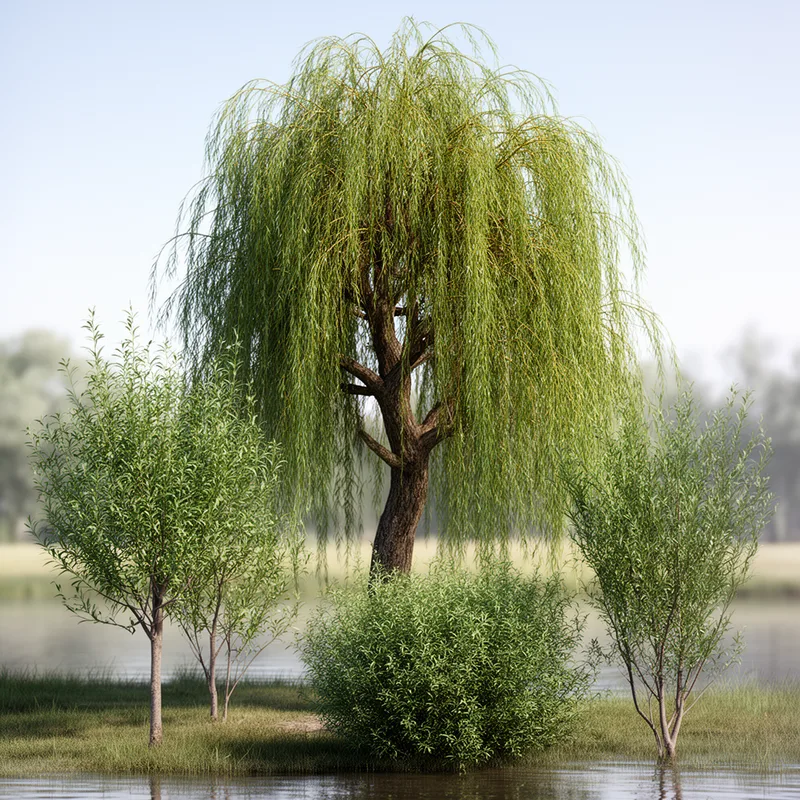
genus Salix
- noun
- /ˈdʒiːnəs ˈseɪlɪks/
- Specialized
- The genus Salix includes both towering trees and small, slender shrubs.
Examples
-
Several species within the genus Salix are prized for their ornamental and environmental value.
-
Many trees in the genus Salix thrive near water.
-
Scientists are studying the genus Salix for its ability to absorb pollutants from wetlands.
-
The genus Salix includes various species of willows.
-
The genus Salix consists of over 300 species, including many that grow near rivers.
-
Some members of the genus Salix are important for erosion control along waterways.
-
The genus Salix features a variety of willows commonly found in temperate regions.
Synonyms

A tree or bush with long flexible branches that often grows near water
Surface Forms
Morphology
The phrase is fully compositional: 'genus' (a biological rank) combined with 'Salix' (the genus of willows) directly yields the meaning 'the genus called Salix comprising willows.' Taxonomic noun phrases follow regular, cross-linguistic naming patterns, so a B1 learner who knows both constituents will readily understand it.
Etymology
Genus Salix comes from Latin. Salix was the Latin word for 'willow' and genus means a 'group' of similar plants, so the phrase names the group of willow trees and shrubs.

