
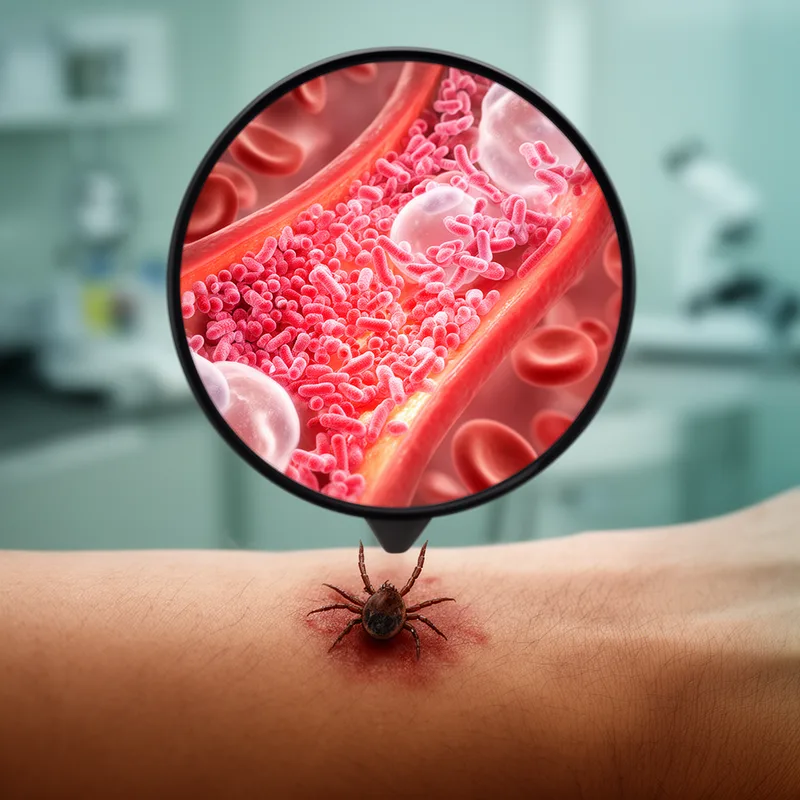
genus Rickettsia
- noun
- /ˈdʒɛnəs rɪˈkɛtsiə/
- Specialized
- Scientists isolated a new strain within the genus Rickettsia from the infected tissue.
Examples
-
The genus Rickettsia includes several species that cause significant diseases in humans.
-
Understanding the genus Rickettsia is crucial for controlling tick-borne illnesses.
-
The genus Rickettsia includes several pathogenic species.
-
Scientists study the genus Rickettsia for its role in human diseases.
-
The genus Rickettsia includes bacteria that can lead to serious illnesses like typhus and Rocky Mountain spotted fever.
-
Scientists study the genus Rickettsia to understand how it is transmitted by ticks and fleas.
-
In medical research, the genus Rickettsia is important for developing vaccines against vector-borne diseases.
Synonyms

 1
9.9
1
9.9

Very small bacteria that live in ticks or mites and cause fevers in people
Surface Forms
Morphology
This expression is compositionally built from 'genus' (a biological rank) + the taxon name 'Rickettsia'; a B1 learner who knows both constituents will understand it denotes the biological genus containing Rickettsia species. The pattern 'genus + [name]' is a standard, cross-linguistic naming convention in biology, so the meaning is directly derivable from the parts.
Etymology
Genus Rickettsia comes from genus, a word for 'a group of related species', and Rickettsia, the name given to honor the scientist Howard Ricketts who studied these bacteria. So it means 'a group of related bacteria named after Ricketts', and today it is used for bacteria that can cause diseases like typhus and Rocky Mountain spotted fever.