

genus Ribes
- noun
- /ˈdʒiːnəs ˈraɪbiːz/
- Specialized
- Many species within the genus Ribes are valued for their edible fruit.
Examples
-
The genus Ribes includes both blackcurrants and gooseberries, which are popular in jams and desserts.
-
Botanists studied the distribution of the genus Ribes across cool temperate zones.
-
The genus Ribes includes many varieties of currants.
-
Did you know that the genus Ribes has both red and black currants?
-
The gardener planted several species from the genus Ribes, including red currants and gooseberries.
-
Farmers often cultivate shrubs from the genus Ribes for their delicious berries.
-
In the garden, you'll find multiple varieties of fruits belonging to the genus Ribes thriving under the sunlight.
Synonyms
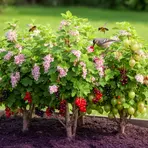
A group of flowering shrubs that make currants or gooseberries
Surface Forms
Morphology
This is a straightforward compositional taxonomic phrase: 'genus' (a biological rank) combined with the proper name 'Ribes' yields 'the genus named Ribes, a group of related species/shrubs.' The structure is literal and follows common cross-linguistic taxonomic naming conventions, so a B1 learner who knows both constituents can infer the meaning.
Etymology
Genus Ribes comes from the Latin plant name Ribes, which early plant scientists used for currant and gooseberry bushes. They put these similar fruit bushes into one genus, a scientific word for a 'group', so today genus Ribes means the group of currant and gooseberry species.

