
genus Platanus
- noun
- /ˈdʒɛnəs ˈplætənəs/
- Specialized
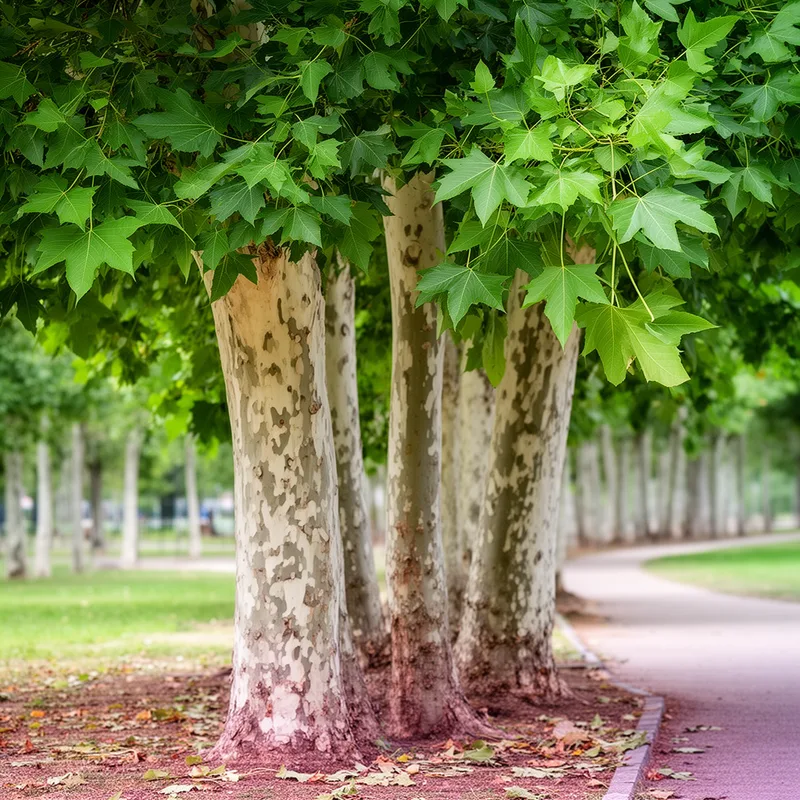
- The genus Platanus is easily identified by its distinctive peeling bark and maple-like leaves.
Examples
-
Several species within the genus Platanus are widely planted in urban areas for their tolerance of pollution.
-
Botanists recently discovered a new member of the genus Platanus in a remote forest region.
-
The genus Platanus includes several species of trees.
-
Many parks feature trees from the genus Platanus.
-
Several species within the genus Platanus are widely planted in urban areas for their tolerance of pollution.
-
The genus Platanus is easily identified by its distinctive peeling bark and maple-like leaves.
-
Many parks feature trees from the genus Platanus that provide shade on hot days.
Synonyms



 1
9.5
1
9.5
A group of large trees that lose their leaves in winter, like the London plane and American sycamore
Surface Forms
Morphology
The phrase combines the noun 'genus' (a biological rank grouping related species) with the proper name 'Platanus', so its meaning — the taxonomic group called Platanus — is directly compositional. This is a standard scientific naming pattern found across languages, so a B1 learner who knows both constituents would readily understand the MWE.
Etymology
Genus Platanus may come from the old Greek word platanos, meaning 'broad', because these trees have wide, maple-like leaves and a smooth, peeling bark. So the name points to the group 'genus' of large, broad-leaved trees like the London plane.