
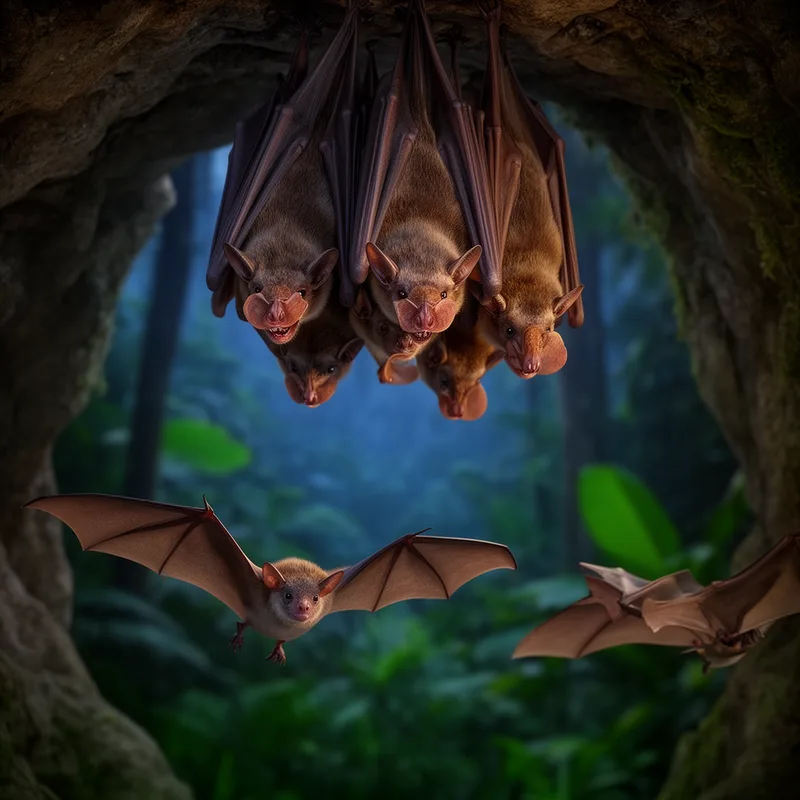
genus Phyllostomus
- noun
- /ˈdʒɛnəs ˌfɪloʊˈstɑːməs/
- Specialized
- The genus Phyllostomus includes some of the largest leaf-nosed bats in the Americas.
Examples
-
Several species within genus Phyllostomus demonstrate unique feeding behaviors.
-
The genus Phyllostomus includes many fascinating species of bats.
-
Scientists studied the cranial structure of genus Phyllostomus to understand bat evolution.
-
Did you know that the genus Phyllostomus is known for its leaf-shaped nose?
-
Scientists studied the cranial structure of genus Phyllostomus to understand bat evolution.
-
Several species within genus Phyllostomus demonstrate unique feeding behaviors.
-
The genus Phyllostomus includes some of the largest leaf-nosed bats in the Americas.
Synonyms
A bat with a leaf-shaped nose that lives in Central and South America
Surface Forms
Morphology
The phrase 'genus Phyllostomus' is directly compositional: 'genus' denotes a biological rank grouping related species and 'Phyllostomus' names the specific group of leaf-nosed bats, so the combined meaning ('the genus called Phyllostomus, comprising those bats') is immediately derivable. This taxonomic naming pattern is common across languages and follows regular English noun-noun naming conventions, making it transparent to learners who know both constituents.
Etymology
Genus Phyllostomus comes from Greek words meaning leaf and mouth. These bats have a leaf-shaped nose near their mouth, so the name helps you picture them as 'leaf-mouthed' bats.

