
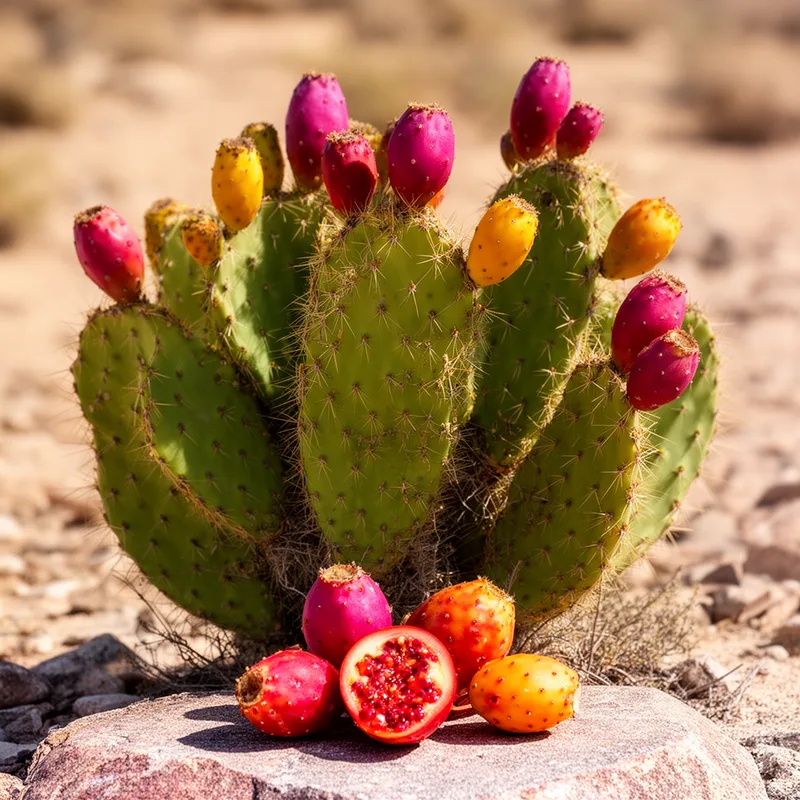
genus Opuntia
- noun
- /ˈdʒɛnəs oʊˈpʌnʧə/
- Specialized
- The edible fruit from cacti of the genus Opuntia is often used in jams and drinks.
Examples
-
The genus Opuntia includes many species commonly referred to as prickly pears.
-
Members of the genus Opuntia are well adapted to arid environments.
-
The genus Opuntia includes many species of cacti.
-
Did you know that genus Opuntia is also known as prickly pears?
-
The genus Opuntia is recognized for its unique flattened, spiny pads and vibrant fruit.
-
Many varieties of the genus Opuntia thrive in desert climates and are popular for their edible fruits.
-
Gardeners often choose plants from the genus Opuntia because they require minimal water and offer delicious harvests.
Synonyms

A large cactus with flat joined stems that has edible fruit
Surface Forms
Morphology
The phrase denotes the taxonomic group and is directly derived from 'genus' (a biological rank grouping related species) plus 'Opuntia' (the cactus genus), so the overall meaning is simply the genus of those cacti. This rank+name composition is a regular, cross-linguistic pattern in scientific naming and is therefore immediately comprehensible to a learner who knows both constituents.
Etymology
The name genus Opuntia may come from an old Greek place called Opus, because ancient writers used a similar word for a plant and later plant scientists kept the name for these cactus plants. So today genus Opuntia means the group of flat, spiny cactus plants known as 'prickly pears'.

