

genus Lythrum
- noun
- Specialized
- Gardeners often plant genus Lythrum species for their striking pink or purple flowers that attract pollinators.
Examples
-
Some wetlands are dominated by the invasive purple loosestrife, a member of the genus Lythrum.
-
The botanical characteristics of the genus Lythrum are important for accurate plant identification.
-
Gardeners often plant genus Lythrum species for their striking flowers and ability to attract pollinators.
-
The genus Lythrum includes several species of flowering plants.
-
Many gardeners love the genus Lythrum for its vibrant flowers.
-
Many wetlands are home to the invasive purple loosestrife, which belongs to the genus Lythrum and is known for its vibrant blooms.
-
The genus Lythrum consists of numerous herbaceous plants valued for their beautiful flowering displays.
Synonyms
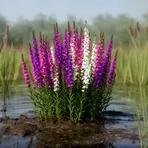
A group of flowering plants with tall spikes of purple, pink, or white flowers that grow in wet places
Surface Forms
Morphology
The phrase is a straightforward taxonomic noun phrase combining the biological rank 'genus' with the taxon name 'Lythrum'; its meaning (the genus called Lythrum) is directly inferable from the constituent words. This compositional pattern (rank + name) is standard in scientific nomenclature and cross-linguistically recognizable, so a B1 learner who knows both constituents would understand it.
Etymology
Genus Lythrum combines genus (a scientific word for a 'group' of plants) and Lythrum, which comes from a Greek word meaning 'blood' or deep red. Early plant scientists used this name because many species have red or purple flowers, so the name points to a group known for those colored blooms.

