
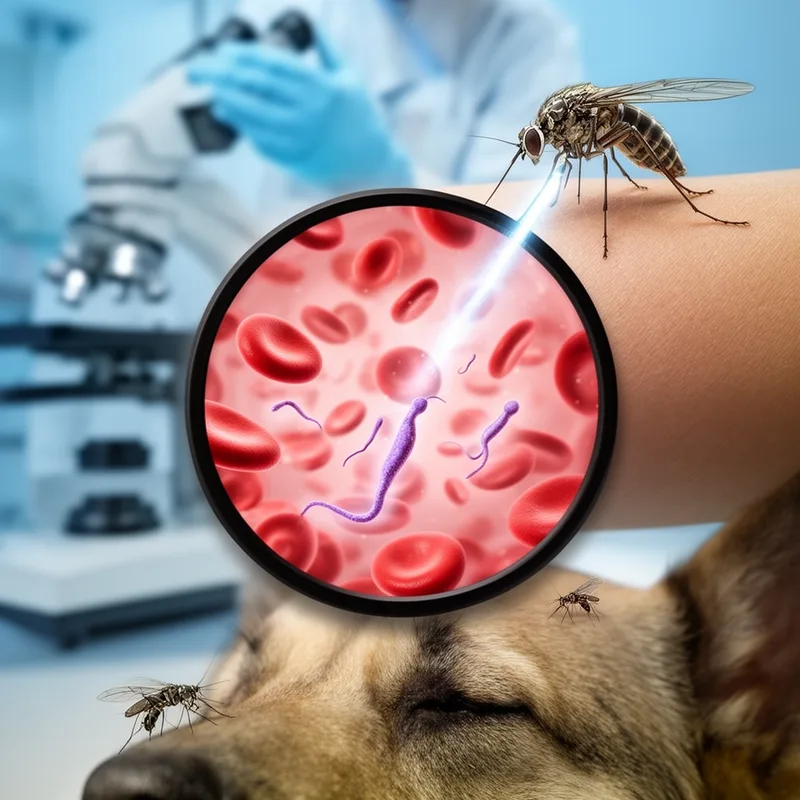
genus Leishmania
- noun
- /ˈdʒɛnəs liˈʃmænɪə/
- Specialized
- Infected sandflies transmit the genus Leishmania to animals and humans through their bites.
Examples
-
The genus Leishmania includes several species that can infect humans.
-
Scientists are studying the genus Leishmania to develop better treatments for leishmaniasis.
-
Identification of the genus Leishmania in blood samples is crucial for accurate diagnosis.
-
Did you know that the genus Leishmania is transmitted by sandflies?
-
Identification of the genus Leishmania in blood samples is crucial for accurate diagnosis.
-
Scientists are studying the genus Leishmania to develop better treatments for leishmaniasis.
-
The genus Leishmania includes several species that can infect humans.
Synonyms
A single-celled parasite that makes people and animals sick, often causing skin sores
Surface Forms
Morphology
The phrase is compositionally transparent: a learner who knows 'genus' (a biological rank) and 'Leishmania' (a group of protozoan parasites) can readily infer that 'genus Leishmania' refers to the taxonomic group containing Leishmania species. This is a standard, cross-linguistically common scientific naming pattern rather than an idiom, so the meaning is directly derivable from the parts.
Etymology
Genus Leishmania is named after Dr William Leishman, who first saw these tiny parasites under a microscope. Scientists used his name for the whole group, so genus Leishmania refers to the related parasites that cause the disease 'leishmaniasis'.

