
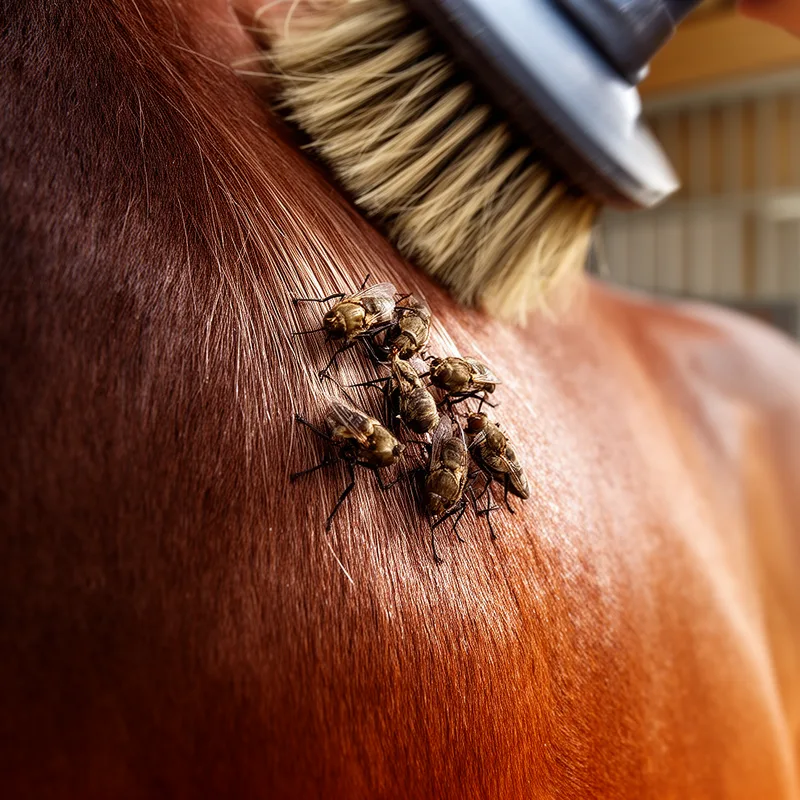
genus Hippobosca
- noun
- Specialized
- The genus Hippobosca is characterized by species that feed on the blood of their hosts.
Examples
-
The genus Hippobosca includes several species of louse flies.
-
The genus Hippobosca includes flies that are parasitic on large mammals.
-
Members of the genus Hippobosca are known for their ability to cling to hosts even while grooming.
-
Scientists have studied the life cycle of the genus Hippobosca to better understand louse fly infestations.
-
Many researchers study the genus Hippobosca to understand its behavior.
-
Within the genus Hippobosca, louse flies exhibit a unique ability to remain attached to animals.
-
Members of the genus Hippobosca play a significant role in the ecology of their host species.
Synonyms

A small fly that lives on animals such as horses and birds and feeds on their blood
Surface Forms
Morphology
The phrase is a straightforward taxonomic composition: 'genus' (a biological rank) applied to the taxon name 'Hippobosca' yields the group of parasitic flies. This is a regular, compositional naming pattern found across languages, so a B1 learner who knows both constituents would readily understand the meaning (noting that 'Hippobosca' is a technical proper name).
Etymology
Genus Hippobosca is the name for the main group of louse flies that live on large animals. The word genus means 'main group' and Hippobosca refers to small, flat flies that cling tightly to fur and feed on blood. So the phrase helps you remember it means a group of bloodsucking flies.

