
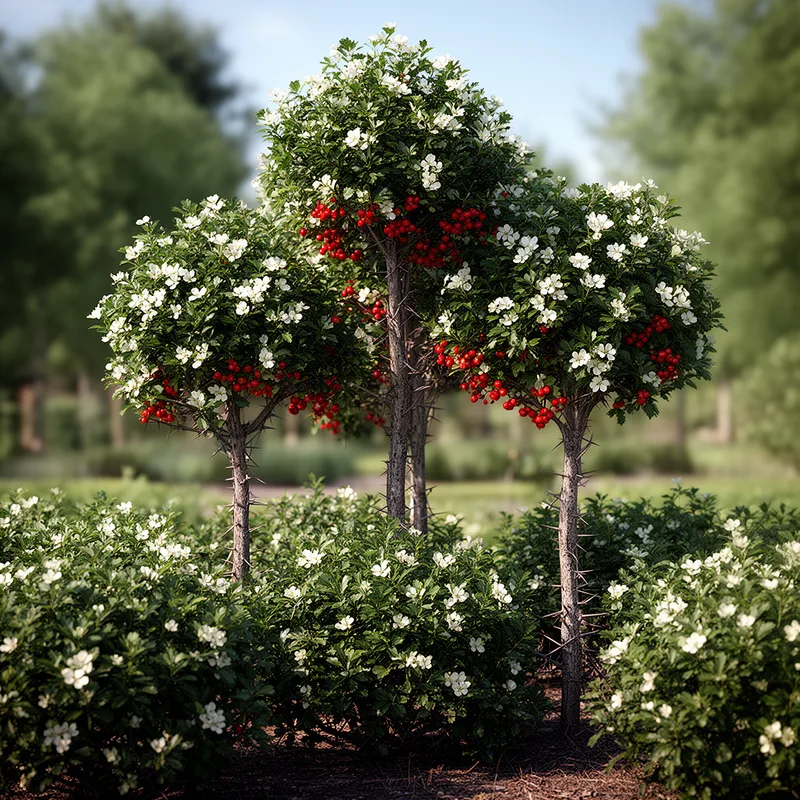
genus Crataegus
- noun
- /ˈdʒɛnəs ˈkreɪtɪɡəs/
- Specialized
- The genus Crataegus includes hundreds of species commonly known as hawthorns.
Examples
-
The genus Crataegus includes several species of hawthorn.
-
Researchers studied the medicinal properties of berries from the genus Crataegus.
-
Many gardens feature trees from the genus Crataegus for their attractive blossoms and fruit.
-
Many plants in the genus Crataegus have medicinal properties.
-
Many gardens feature trees from the genus Crataegus for their attractive blossoms and fruit.
-
Researchers studied the medicinal properties of berries from the genus Crataegus.
-
The genus Crataegus includes hundreds of species commonly known as hawthorns.
Synonyms

 7
5.4
7
5.4

A small tree or bush with white spring flowers and red berries

A thorny bush or small tree with small white flowers and red berries
Surface Forms
Morphology
The phrase is fully compositional: 'genus' denotes a biological rank and 'Crataegus' is the name of that genus, so a learner who knows both constituents can infer it refers to the genus of hawthorns. This follows standard taxonomic naming conventions (Latin binomials) found across languages, making the meaning directly derivable from the parts.
Etymology
Genus Crataegus may come from an old Greek word krata- meaning 'strength', because hawthorn wood is very hard. So the name helps you remember this group of thorny shrubs and small trees now called hawthorns.