

genus Chlamydomonas
- noun
- /ˈdʒɛnəs kləˈmɪdəˌmoʊnəs/
- Specialized
- The genus Chlamydomonas is important in studies of photosynthesis and cell motility.
Examples
-
The genus Chlamydomonas includes various species of green algae.
-
Certain species within the genus Chlamydomonas can become pests in filtration plants.
-
Algae belonging to the genus Chlamydomonas are often found in damp soil and freshwater environments.
-
Many researchers study the genus Chlamydomonas for its unique properties.
-
Researchers studied the genus Chlamydomonas to understand its ecological role in freshwater environments.
-
The genus Chlamydomonas includes species that thrive in both freshwater and damp soil habitats.
-
In lab experiments, scientists used the genus Chlamydomonas to test the effects of light on photosynthesis.
Synonyms


 1
9.9
1
9.9
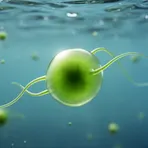
A single-celled green organism with two tail-like parts that help it swim in fresh water
Surface Forms
Morphology
This noun phrase is fully compositional: 'genus' (a taxonomic rank) combined with the proper name 'Chlamydomonas' yields the meaning 'the genus named Chlamydomonas.' Taxonomic naming patterns are cross-linguistically common and follow straightforward semantic composition, so a learner who knows both constituents will understand the MWE.
Etymology
Genus Chlamydomonas may come from old Greek words meaning 'cloak' (chlamys) and 'single' (monas), because each alga is a single cell that looks as if it wears a tiny coat. That's why the name fits this group of small algae with tiny tails that help them swim, often found in fresh water and damp soil.