
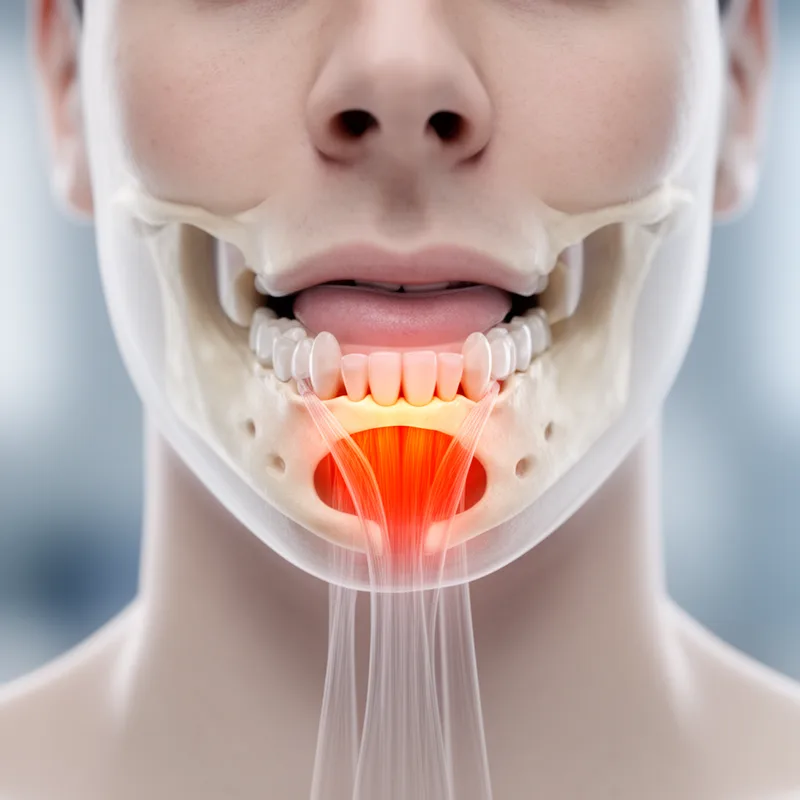
genial
- adjective
- /ˈdʒiːniəl/
- Specialized
- During the dental procedure, the surgeon carefully examined the genial tubercle to ensure proper alignment.
- genial tubercle
Examples
-
Anterior repositioning of the genioglossus muscle is achieved by a conservative mandibular osteotomy that advances the genial tubercle without moving the teeth or mandible.
Academic text (1999) -
Before the osteotomy is completed, a titanium screw is placed in the outer cortex to control and manipulate the genial tubercle fragment.
Academic text (1999) -
This procedure is designed to advance the tongue at the genial tubercle attachment (Figure 4).
Academic text (1999) -
The advancement of the genial tubercle increases the tension on the tongue musculature, thus limiting its posterior displacement during sleep.
Academic text (1999) -
The current technique of mandibular osteotomy with genioglossus advancement involves a limited osteotomy intraorally to isolate and advance the genial tubercle.
Academic text (1999) -
The orthodontist explained that the genial tubercle plays an important role in jaw mechanics.
-
To enhance the patient's airway, the doctor focused on the anatomy of the genial region during the evaluation.
Synonyms

 5
9.9
5
9.9

Relating to the chin or lower jaw
Surface Forms
Morphology
genial = geni + al
This is a technical anatomical adjective from a Latin/Greek combining form meaning 'chin' (genio-), which is not a familiar English base for most learners and so the meaning is not transparently inferable.
Etymology
Genial (anatomy) comes from the Greek word geneion, which means 'chin', so in medical language genial simply names the central area of the lower jaw.