
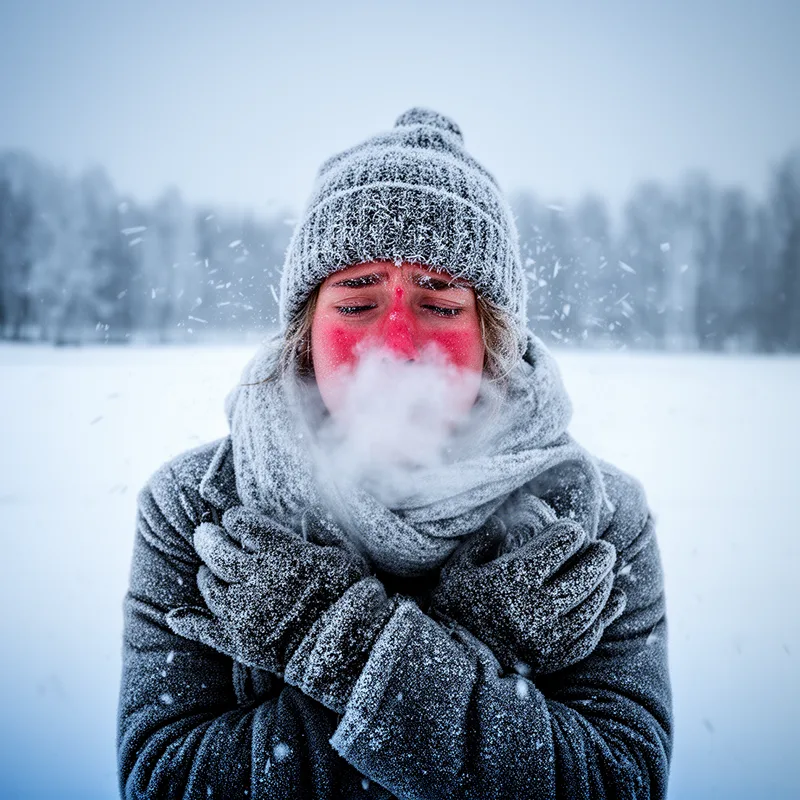
gelid


 1
9.9
1
9.9
- adjective
- /ˈdʒɛlɪd/
- Formal
- "I guess," agrees Natalie, retreating, and as she turns away, her eyes, magnified by thick lenses, film with gelid tears.
Examples
-
"There is one thing we have not, and it is that thing we are obliged to desire." "And that is?" Kudra buttoned her vest against the first blown drops of gelid rain.
Fiction book (1990) -
We may be the most famous example of the radiant future glimpsed through a gelid eye.
Blog text (13) -
"It's going to take more than a hundred." Rich's smile never wavered, but his eyes turned gelid.
Fiction book (1995) -
He'd offered the tray to Abby, who'd bitten off a piece of gelid gherkin, which several minutes later she had to remind herself to swallow.
Fiction book (2002) -
Even as I looked upon his now-hideous countenance, my vision itself seemed locked within a vault of cold, so that I had gone beyond trembling or shivering to become one with the gelid horror of what I saw.
Fiction book (2002) -
She pressed gently with her fingers along the ridge of the wound: gray-white, gelid fluid spurted through, a thin jet nearly striking her face.
Fiction book (1992) -
Something, some emotion, stared at me from his gelid eye, some knowledge of depths I would never know, something sparkling like bream, something suspended there but as elusive to me as plankton.
Fiction book (1996) -
He could see the pale, gelid flow beneath the ice: half-frozen liquid like a thick gray-green soup through which moved sluggishly a nearly dormant six-inch-long silvery fish.
Fiction book (1992) -
The gelid wind stung my face as I stepped outside on that frosty morning.
-
After spending hours outside, my fingers felt gelid and needed warming.
Synonyms
 89
1.0
89
1.0
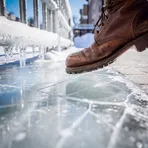
Very cold with surfaces covered in ice

 30
4.1
30
4.1
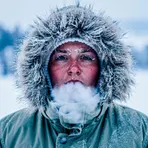
Very cold, like ice or freezing air
 15
1.3
15
1.3
Very cold, at or below freezing
 14
4.5
14
4.5
Very cold, like the weather near the North Pole
 11
1.0
11
1.0
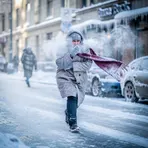
Cold, often with a thin layer of ice on the ground
 2
6.1
2
6.1
Very cold in temperature like ice
Antonyms


How Cold

Surface Forms
Morphology
gelid = gel + id
The element 'gel-' is a learned combining form (not a productive, standalone English base) and the adjective formation is unlikely to be inferred by an average learner from its parts.
Etymology
The word gelid comes from the Latin gelidus meaning 'icy', from gelu meaning 'frost', and you can see the same root in congeal and gelatin, words about freezing or setting. So, gelid simply means very cold or icy.