
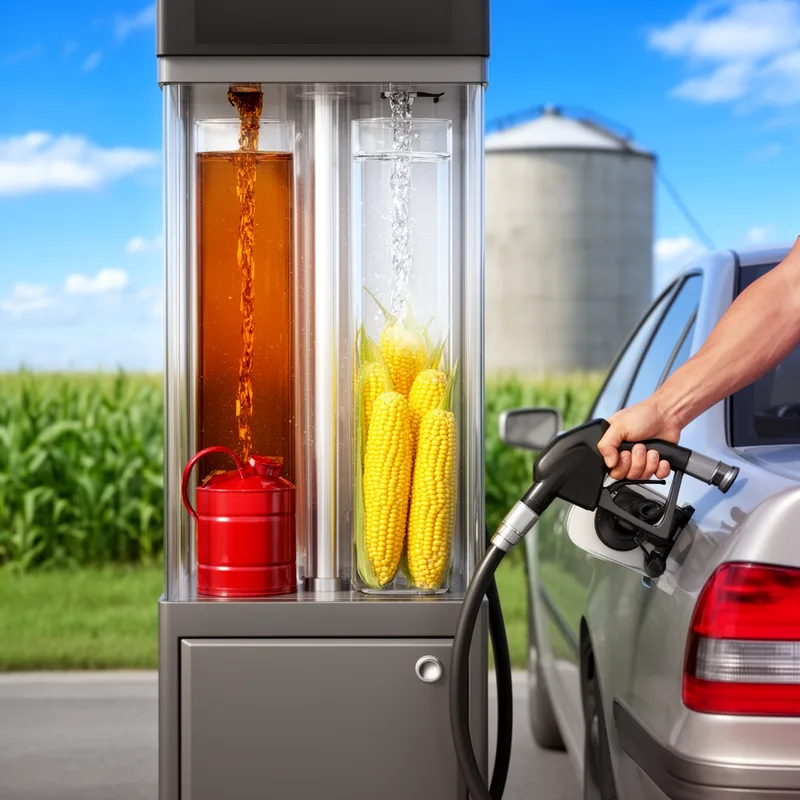
gasohol


 1
6.5
- noun
- /ˈɡæsəˌhɔl/
- Specialized
- The environmental benefits of using gasohol include reduced greenhouse gas emissions from vehicles.
- gasohol mixture
Examples
-
Therefore, the benefit in terms of CO2 emissions and energy generated by substituting gasohol for ethanol, expressed in terms of ecological footprint area required, is approximately 6.09 million ha.
Academic text (2006) -
Consequently, if the whole Brazilian automobile fleet used ethanol, the area required to absorb CO2 would be 6.08 million ha smaller than if the same fleet used gasohol.
Academic text (2006) -
Half high-tech car, half truck, half electric, half gasohol.
Fiction book (2001) -
To run the same 65,280 km with gasohol, 4.67 m³ of gasohol would be required.
Academic text (2006) -
To run the same 65,280 km with gasohol, 4.67 m³ of gasohol would be required.
Academic text (2006) -
In the Brazilian case (table 9), the forest area required as a sink for CO2 emissions from one automobile is 0.38 ha smaller if this automobile uses ethanol instead of gasohol as fuel.
Academic text (2006) -
All fueling stations in Brazil sell pure ethanol (E95) as well as gasohol, a 25 percent ethanol/75 percent gasoline blend (E25).
Academic text (2006) -
In Brazil, ethanol for fuel is derived from sugarcane and is used pure or blended with gasoline in a mixture called gasohol (24% ethanol, 76% gasoline).
Academic text (2006) -
Many modern cars are designed to run on gasohol, which is a blend of gasoline and ethanol.
-
When filling up, drivers should check if the pump offers gasohol as an alternative to regular gasoline.
Surface Forms
Morphology
Etymology
Gasohol combines the simple words gas and alcohol, and the 'alcohol' part means the plant fuel ethanol, often made from corn or grains. So gasohol is just gasoline mixed with a little alcohol — a fuel that can help reduce use of imported oil.