

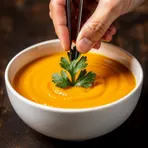
to garnish the dish
- phrasal verb
- You can garnish the dish with lemon zest to add color and flavor.
Examples
-
Many cooking shows teach you how to garnish the dish to impress your guests visually.
-
Before serving, the chef likes to garnish the dish with edible flowers for a finishing touch.
-
Please garnish the dish with fresh herbs!
-
Can you garnish the dish with parsley?
-
To make it visually appealing, garnish the dish with fresh herbs and lemon slices.
-
Before serving, be sure to garnish the dish with a sprinkle of sesame seeds for added flavor.
-
He decided to garnish the dish with edible flowers to impress his guests.
Synonyms
 15
3.5
15
3.5

To decorate food with small pieces to add color and flavor
 10
6.3
10
6.3
To make something more beautiful by adding decorative details
 9
3.5
9
3.5
To add small pieces of food on top of a dish to make it look nicer
How Garnished

Surface Forms
Morphology
The meaning 'to add small amounts of food or decoration to a dish' is directly and literally derived from combining 'garnish' (to add decorative/flavoring items) with 'dish' (a prepared food); there is no idiomatic shift. This compositional culinary pattern is common and predictable, so a B1 learner who knows the constituent words would readily understand the MWE.
Etymology
Garnish the dish comes from the simple image of the verb garnish — putting small, colorful items like herbs or lemon slices on a dish to make it look nicer. So, it means 'to add small food or decoration to improve appearance'.