

gand flower
- noun
- Archaic
- The gand flower was once commonly used in herbal remedies to support breastfeeding mothers.
Examples
-
Many gardens in Europe feature the gand flower for its attractive blue and pink racemes.
-
The gand flower blooms in early spring.
-
Despite its beautiful appearance, the medicinal value of the gand flower is now considered largely folkloric.
-
I saw a beautiful gand flower in the garden.
-
Many gardens in Europe feature the gand flower for its attractive blue and pink racemes.
-
The gand flower was once commonly used in herbal remedies to support breastfeeding mothers.
-
Despite its beautiful appearance, the medicinal value of the gand flower is now considered largely folkloric.
Synonyms
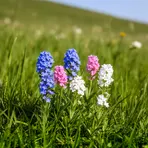
A small European plant that lives for several years and often grows in meadows, with blue, pink, or white flowers
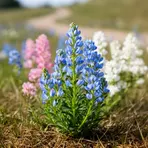
A small plant that lives for several years with branches and clusters of blue, pink, or white flowers
Surface Forms
Morphology
gand + flower
The modifier 'gand' is not a recognizable English lexical item (dictionary shows it as not found), so knowing 'flower' alone does not allow a learner to infer the specific plant identity or its lactation-related property. This is a lexicalized species name-like compound whose specific meaning is arbitrary and not compositionally predictable from its parts, making it opaque to a B1 learner.
Etymology
Gand flower may come from old herbal practice: people used its bunches of small blooms to make a drink for new mothers, believing the plant would help milk flow. One popular story says the image of gand and its many flowers helping a nursing mother is why it became linked with 'promoting lactation'.

