
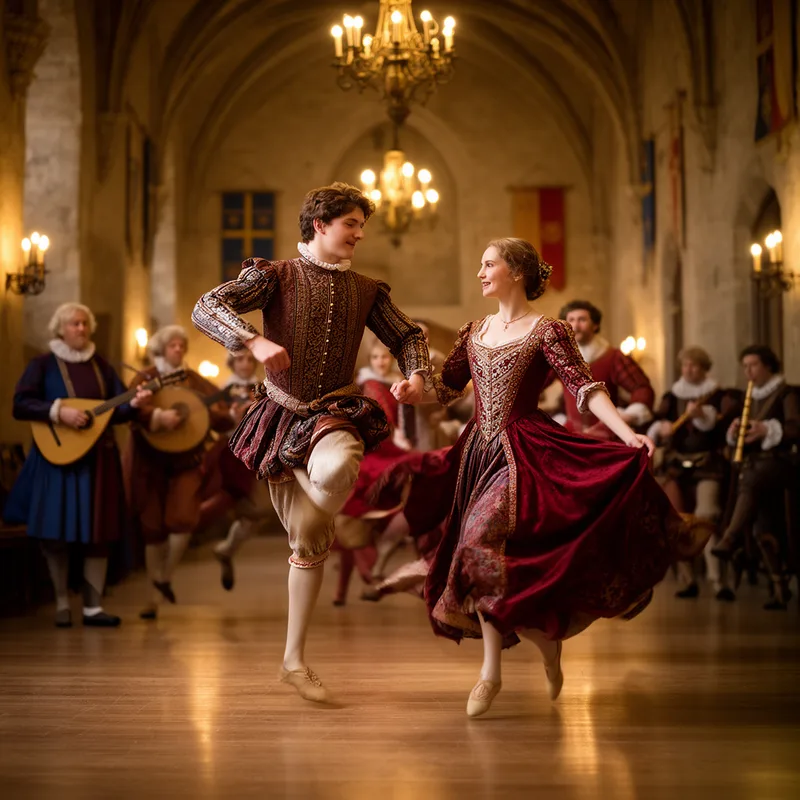
galliard


 1
9.9
- noun
- /ˈɡæliˌɑrd/
- Archaic
- A consort played a galliard in another room.
Examples
-
The Brass will perform Samuel Scheidt's "Galliard Battaglia."
Academic text (1996) -
If I had to have such a simple ground, a mere drone, then let me have a lively treble over it, a galliard or a pavane, as in Elizabethan lute duets.
Academic text (1994) -
At the festival, dancers delighted the audience with a vibrant galliard that showcased their joy and skill.
-
The musicians played a spirited galliard that filled the hall with the lively sounds of the Renaissance.
-
During the wedding, the couple surprised their guests with a traditional galliard that had everyone clapping along.
Synonyms
 3
8.9
A fast lively Italian dance and the music for it
 2
9.9
A lively French dance or music for it from the 1600s and 1700s
 1
9.9
A lively court dance from the 1500s and 1600s in three-beat time
 1
9.9
A lively dance or musical piece in a fast three-beat rhythm
Surface Forms
Etymology
Galliard was the name of a lively dance from the Renaissance and comes from the old French gaillard, meaning 'lively' or 'bold'. The dance had quick steps and jumps, which is why a galliard means a lively dance or the music that goes with it.