
gigue
- noun
- /dʒiːɡ/
- Specialized
- This gigue, then, would seem to be an example of the compound single meter that cannot be found in music theory texts.
- notate this gigue
Examples
-
A good example is the gigue from his Orchestral Suite No. 3, notated in 6/8, shown in Figure 7.
Academic text (2015) -
Interestingly, J. S. Bach also notated gigues in other time signatures, such as 6/8 and 12/8.
Academic text (2015) -
I would argue that this is a perfectly good way to notate this gigue.
Academic text (2015) -
To investigate further, let us look at the gigue, a musical dance form sometimes notated in 3/8.
Academic text (2015) -
Figure 4 shows the beginning of the gigue from Johann Sebastian Bach's Cello Suite No. 2.
Academic text (2015) -
Like scherzi, gigues are lively and fast, sufficiently so that the triple component eighth notes in the case of a 3/8 gigue are audiated as microbeats, with the dotted quarter getting the beat.
Academic text (2015) -
The lively gigue brought energy to the dance floor, with everyone eager to join in.
-
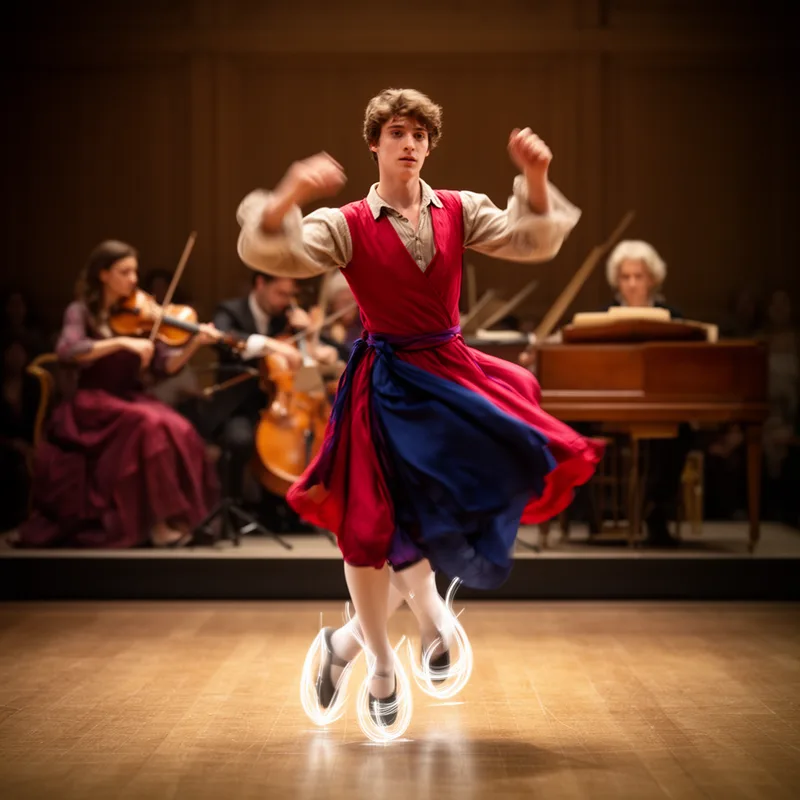
He excitedly performed a gigue, showcasing his skill at this traditional Baroque dance.
-
Many composers wrote pieces in the style of a gigue, capturing its lively rhythm and joyful spirit.
Synonyms

 16
4.8
16
4.8

A lively traditional dance with quick jumping movements
How Lively


Surface Forms
Etymology
The word gigue comes from the same root as the English dance jig and the Italian word giga, which meant a 'small string instrument'. So a gigue in Baroque music is a quick, lively dance or a musical piece in that style.