

gaiter
 1
8.9
1
8.9

- noun
- /ˈɡeɪtər/
- Mr. Kernan is a staunch believer not in divine grace or the articles of the church but in things like silk hats and gaiters: "By grace of these two articles of clothing," he said, "a man could always pass muster" (D 154).
- neck gaiters
- waterproof gaiters
- gaiters and boots
Examples
-
I just returned from northern Minnesota where, with gaiters, I wore them while moving about in 2+ feet of new snow and strapped snowshoes onto them in deeper snow.
Blog text (33) -
When I'm out camping, my favorite attire includes shorts and leggings/gaiters.
Blog text (22) -
He'd directed customers before them so they could see the woolen muffler or how the gaiters fit on someone like his regular customer, Mr. Helmke.
Fiction book (1993) -
In terms of fashion, Quilter says, native men seemed to adopt Spanish clothing styles—singlets, leggings, gaiters—more readily, while women kept wearing traditional styles.
Academic text (2011) -
The door flung open, and Mr. Toad—in goggles, cap, gaiters, and an enormous overcoat—came swaggering down the steps.
Fiction book (1996) -
To protect his legs while hiking in the rain, he wore waterproof gaiters over his boots.
-
The soldier donned his uniform, including sturdy gaiters to keep mud off his trousers.
-
For the snowy trail, remember to wear gaiters to prevent snow from entering your footwear.
Synonyms
 4
9.9
4
9.9
A cloth cover worn over a shoe and lower leg
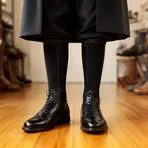
An ankle-high shoe with elastic sides, worn in the 1800s and early 1900s
Compounds
- Archaic
An ankle-high shoe with elastic sides, worn in the 1800s and early 1900s
How Protective


Surface Forms
Etymology
The word gaiter comes from an old French word for a leg covering, and a helpful way to remember it is to think of gait 'way of walking' because gaiters cover the lower part of the leg where you walk. So, gaiters protect your lower leg and keep mud, snow, and dirt out of your shoes or boots.