
future perfect


 1
5.5
1
5.5
- noun
- /ˈfjuːtʃər ˈpɜːrfɪkt/
- Specialized
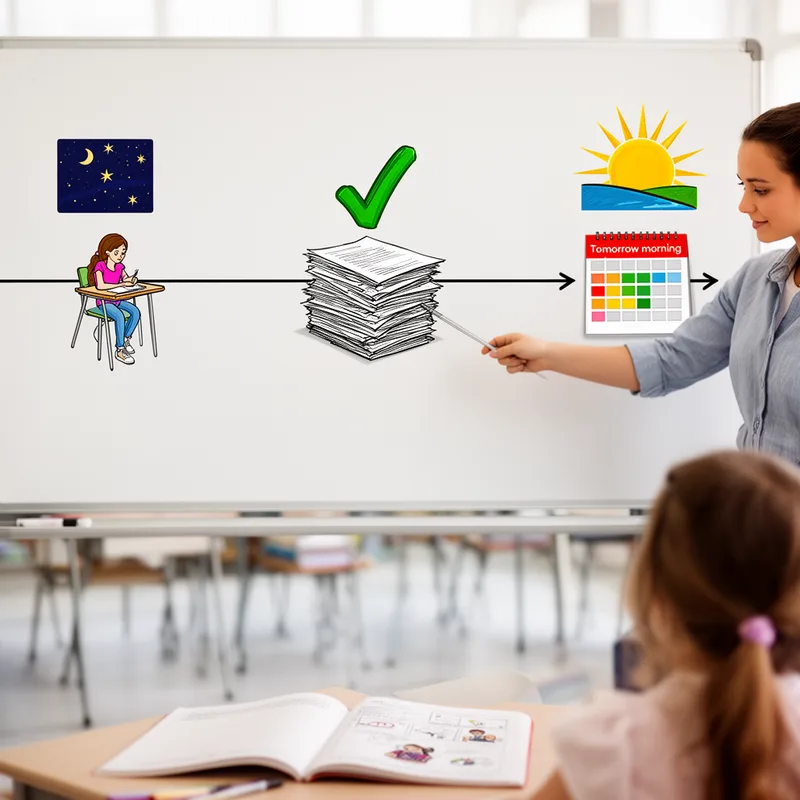
- When we say, "She will have traveled around the world by the time she turns 30," we are using the future perfect tense to indicate an action that will be completed in the future.
Examples
-
Moreover, the narrator uses the future perfect subjunctive of "acabar," "hubiere acabado," to acknowledge that the knight's very existence is the merest conjecture.
Academic text (1998) -
Against the Day is concerned with that ineluctability, and I would go so far as to lay it down as a general rule that every novel in which there's an element of time travel is concerned, as a matter of tense, not with the future, but the future perfect.
Blog text (21) -
The future perfect isn't about what will happen, but what will have already happened: much more of a dead looming weight than the mere future, or, for that matter, any of the past tenses.
Blog text (21) -
The 36 cases of modal future/conditional past tenses are distributed as follows: conditional (22), future perfect (12), conditional perfect (2), as shown in Table 6.
Academic text (1995) -
In the sentence, "By next year, I will have completed my degree," the phrase future perfect describes an action that will be finished before a specific time.
-
The statement, "They will have finished the project by the deadline," illustrates the use of the future perfect tense to show that the action is expected to be complete before a certain point.
Synonyms

A verb form that shows an action will finish before a future time
Surface Forms
Morphology
The term is transparently compositional: 'future' (pertaining to a later time) combined with 'perfect' (denoting completed action) yields a tense for actions completed before a future time. This follows a common cross-linguistic tense-naming pattern (e.g. Spanish/French equivalents), so a B1 learner who knows both constituents can deduce the meaning.
Etymology
The term future perfect comes from two parts: future meaning time ahead and perfect meaning 'completed' or 'finished'. So the name shows that this tense talks about actions that will be completed before a certain time in the future.