
fugacious
- adjective
- /fjuˈɡeɪʃəs/
- Formal
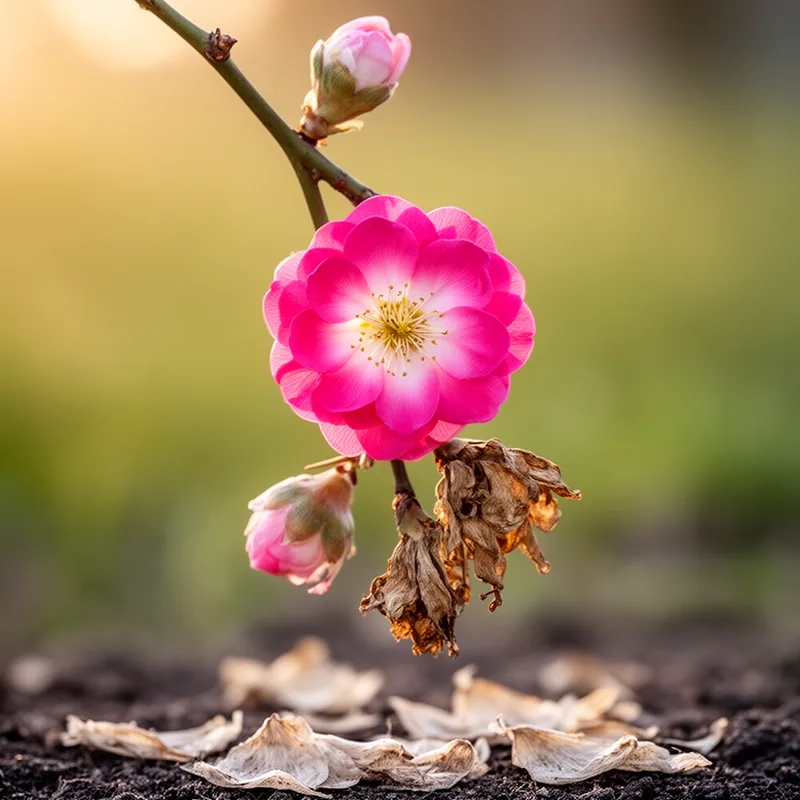
- Some flowers bloom in a fugacious burst of color before fading within days.
Examples
-
Oh, how fugacious these memories are!
-
The beauty of the autumn leaves is fugacious and must be enjoyed while it lasts.
-
His fame proved fugacious, as the world quickly moved on to the next sensation.
-
The beauty of the sunset is fugacious.
-
The fugacious beauty of the sunset left everyone in awe as it quickly faded away.
-
Their happiness was fugacious, lasting only until the end of summer.
-
The flowers bloom in spring but are often fugacious, wilting before summer arrives.
Synonyms

 66
6.3
66
6.3

Lasting only a short time
 49
3.9
49
3.9
Lasting only for a short time
 44
4.8
44
4.8
Lasting only a very short time
 38
7.0
38
7.0
Lasting only a short time and not permanent
 17
8.6
17
8.6
Lasting only a very short time
 11
6.8
11
6.8
Lasting only a short time

Lasting only for a short time
Antonyms


How Brief

Surface Forms
Morphology
fugacious = fugac + ious
Built from a Latinate combining form 'fugac-' plus the adjective suffix '-ious'; the root is not a productive or recognizable English base for most learners, so the meaning 'fleeting' cannot be reliably derived from known English words.
Etymology
The word fugacious comes from the Latin fugere, which means 'to flee' or 'run away' and appears in the familiar word fugitive. So something fugacious 'flees' quickly and lasts only a short time.