

franklin
- noun
- /ˈfræŋklɪn/
- Archaic
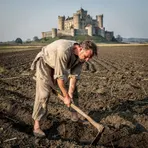
- A franklin held land but did not possess the privileges of the nobility.
Examples
-
In Chaucer's tales, the franklin is portrayed as a generous and hospitable man.
-
Many franklins played important roles in local governance.
-
By the fifteenth century, the status of a franklin became increasingly rare in English society.
-
The franklin owned a large estate in the countryside.
-
In Chaucer's tales, the franklin is portrayed as a generous and hospitable man.
-
By the fifteenth century, the status of a franklin became increasingly rare in English society.
-
Many franklins played important roles in local governance.
Antonyms


Compounds



 1
3.6
A bridge held up by cables across the Delaware River between Philadelphia and Camden, New Jersey
Surface Forms
Morphology
Etymology
The word franklin comes from an old word based on frank, which meant 'free'. In medieval England a franklin was a free landowner, not a noble, and the word later became a family name like Benjamin Franklin.