
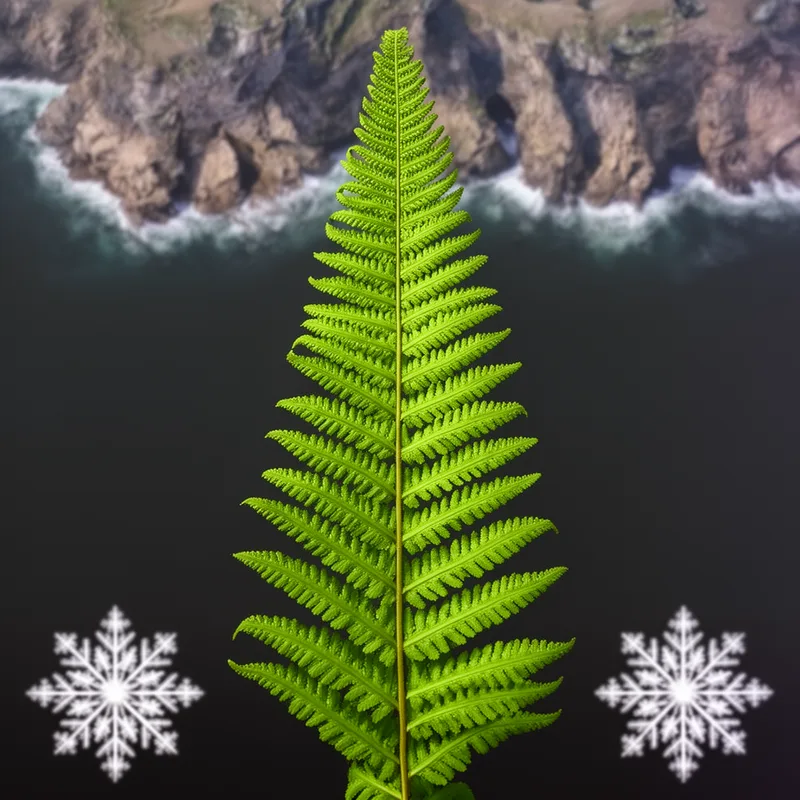
fractal pattern
 1
7.5
1
7.5

- noun
- /ˈfræk.təl ˈpæt.ərn/
- Specialized
- By studying fractal patterns in nature, students are exposed to concepts that span many fields, including physics, chemistry, biology, and environmental science.
Examples
-
Tiny crystals are forming in familiar, unearthly fractal patterns.
Fiction book (1997) -
Lightning traced fractal patterns across the blackness above.
Fiction book (1999) -
I poured a little cream into it, watching it swirl and break up into fractal patterns.
Fiction book (1997) -
Faint fractal patterns of darker black writhe across my surfaces.
Fiction book (2002) -
But it all begins at the center, like a fractal pattern, with resilient households determining how the future unfolds.
Blog text (20) -
And we're looking at pictures of these and they're gorgeous, extremely delicate and interesting fractal patterns that are symmetrical.
-
The tree's branches formed intricate fractal patterns that captivated everyone observing it.
-
In mathematics, a fractal pattern is often used to illustrate the concept of self-similarity.
-
Snowflakes exhibit beautiful fractal patterns that repeat their structure at smaller scales.
Synonyms
 7
8.8
7
8.8
A shape that looks similar at different sizes, like a snowflake or fern
How Self-Similar

Surface Forms
Morphology
The noun phrase is strictly compositional: 'fractal' (self-similar geometric shape) modifies 'pattern' (a repeated design), so the meaning 'a pattern exhibiting fractal/self-similar structure' follows directly from the constituents. Although 'fractal' is a technical term, if a learner knows both words the combined meaning is predictable and cross-linguistically straightforward, so it is transparent.
Etymology
Fractal pattern comes from nature: a fractal is a shape whose pattern 'repeats' at different sizes, like a fern where a small leaf looks like the whole plant. So we use fractal pattern to mean a complex shape in nature or math that 'repeats' the same look no matter how close you look.