

fortepiano


 1
9.8
1
9.8
- noun
- /ˌfɔr.tɪˈpiː.ə.noʊ/
- Specialized
- The fortepiano features a lighter tone compared to the modern piano, making it ideal for early classical music.
Examples
-
The music sounded beautifully warm and expressive on the fortepiano during the concert.
-
This one is a Dowd, this square one is a Dutch-style virginal, a Skovroneck, and this is a genuine Stein fortepiano like the kind Mozart used, from about 1796.
Academic text (2002) -
Many musicologists prefer the fortepiano for performances of classical compositions, as it captures the era's unique sound.
Synonyms
 3
9.6
3
9.6
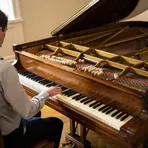
A large keyboard instrument like a piano where keys make hammers hit strings to make sound
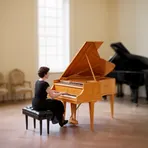
An early piano from the 18th and early 19th centuries with a lighter, more delicate sound
How Loud
698
1.0

- Specialized
1
9.8
7
8.4
- Archaic
1
9.9
1
9.9
Surface Forms
Morphology
Etymology
Fortepiano comes from the Italian parts forte and piano, which mean 'loud' and 'soft', and the early piano was called this because it could play both. So the name explains why that instrument had a lighter, more changeable sound than the modern piano.