
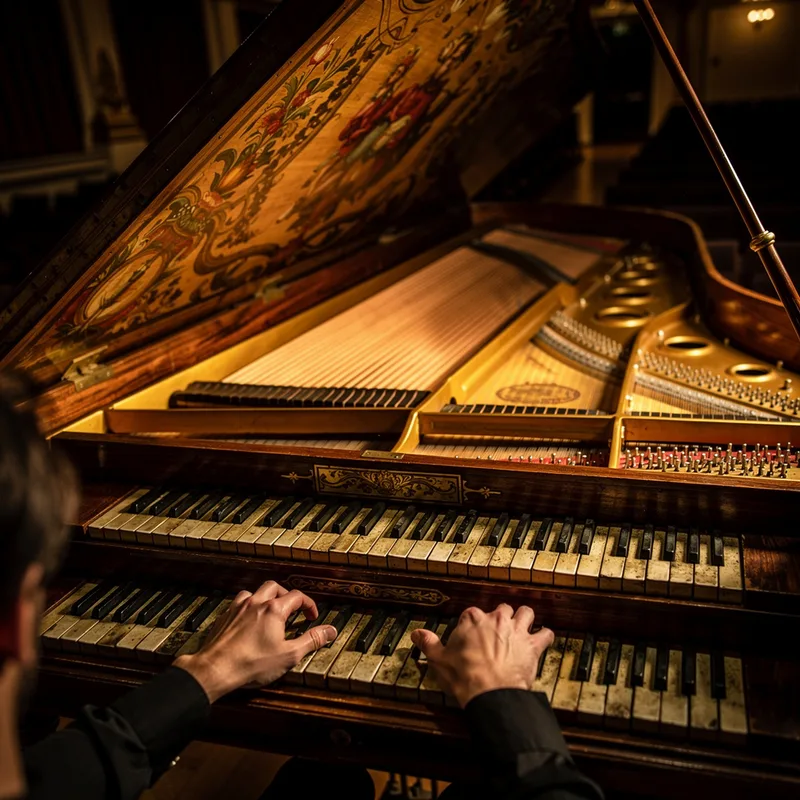
harpsichord
 7
8.4
7
8.4

- noun
- /ˈhɑːrp.sɪ.kɔrd/
- Traditionally, piano and organ are standard accompanying instruments, but instruments such as guitar, lute, and harpsichord work equally well.
- harpsichord and piano
- harpsichord or organ
- harpsichord and guitar
Examples
-
From up the sweeping stairway came the sounds of a harpsichord.
Fiction book (1994) -
One of my firm's clients is giving a harpsichord concert at the Little Carnegie Hall.
Fiction book (1995) -
So just wanted to talk a little bit about the harpsichord in its place in history.
-
Toward the end of our stay in Italy, I said to my husband, "Call the harpsichord man."
Academic text (2002) -
Nicholas has never played the harpsichord in his life.
-
Louis enters the mansion, following the harpsichord music, as if in a dream.
Fiction book (1994) -
"Mrs. Shippen is teaching me to play the harpsichord."
Fiction book (1994) -
Historically, the harpsichord has been associated with the affluent and cultivated, and there they are.
Academic text (2017) -
I was across the hall in the parlor, playing the harpsichord as Peggy liked me to do whenever they took supper.
Fiction book (1994) -
The sound of the harpsichord filled the room with its bright, distinctive tone during the concert.
Synonyms
A keyboard instrument like a piano that makes sound by plucking strings
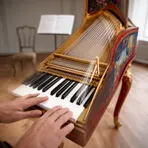
A keyboard instrument like a piano that makes sound by plucking strings
How Loud

Surface Forms
Morphology
Etymology
Harpsichord comes from the parts harp and chord, with chord originally meaning 'string'. So a harpsichord is like a 'harp of strings' played from a keyboard, which fits because its strings are plucked to make a bright sound.