
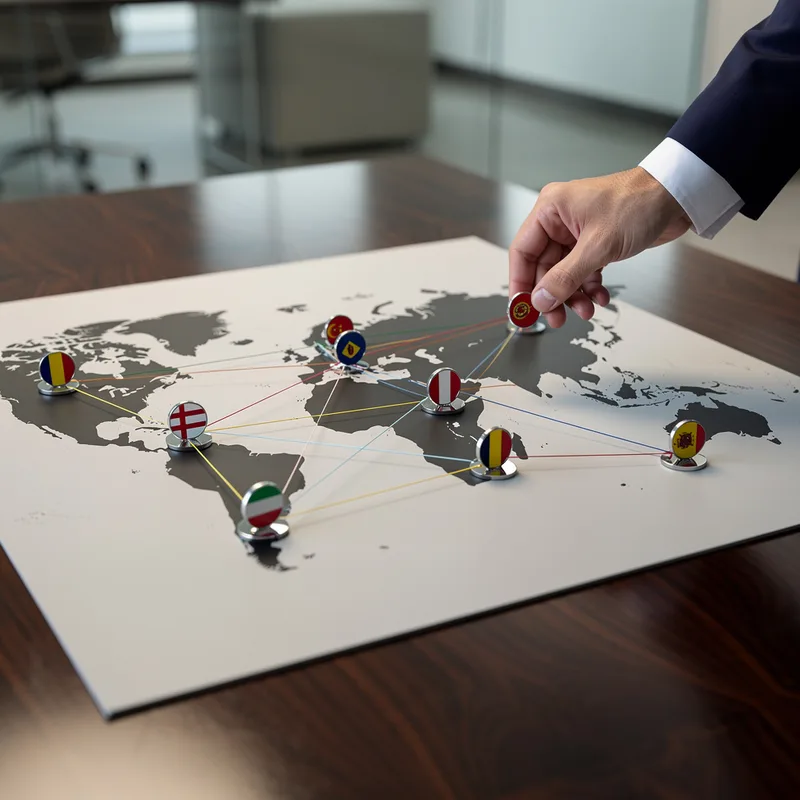
foreign policy
 362
3.4
362
3.4

- noun
- /ˈfɔrɪn ˈpɑlɪsi/
- The new president outlined his administration's foreign policy during the inaugural address.
- U.S. foreign policy
- American foreign policy
- domestic and foreign policy
Loading YouTube…
Watch on YouTubeBut but they said you should not base your foreign policy on constant military threats.
- But but they said you should not base your foreign policy on constant military threats.
- Whenever you look strong and decisive on foreign policy issues, I think you benefit.
- It is the most conspicuous failure of US foreign policy probably since the Iraq war.
- I don't appraise the Trump foreign policy highly.
- And, you know, the question for for foreign policy experts is, is that a good thing?
- There is a new foreign policy doctrine in Russia.
- So what is the role of Parliament in relation to foreign policy, security and conflict?
- And that was one of the key foreign policy proposals of the Bush White House.
- I mean, seriously, that's how you're negotiating foreign policy with a cruel dictator.
- Whereas the the State Department used to drive American foreign policy, it does not so much now.
- He he hasn't focused a lot on foreign policy.
- The reason why this is continuing is because of US foreign policy.
- Please tell me, what mistakes has China made in its foreign policy?
- We like to do things and that is what is propelling a foreign policy of intervention and activism.
- Advance some important legislation during COVID, You know, senior roles on various foreign policy committees.
- It's always necessary for governments to have some, you know, economists or foreign policy specialists.
- And now he is sowing doubt in our foreign policy.
Examples
-
I also think that this treaty is not a major foreign policy priority for either government.
-
There is a new foreign policy doctrine in Russia.
-
So we're very active and you had to be in foreign policy matters.
-
Then work my way through to U.S. foreign policy.
-
May we speak a little about foreign policy?
-
And, you know, the question for for foreign policy experts is, is that a good thing?
-
Whereas the the State Department used to drive American foreign policy, it does not so much now.
-
Well, that is a thoughtful take on foreign policy.
-
And in any case, he was sent here to implement foreign policy, not to make it.
Fiction book (1995) -
Whenever you look strong and decisive on foreign policy issues, I think you benefit.
How Active
2
7.6
 362
3.4
362
3.4
Surface Forms
Morphology
The meaning 'a government's strategy for dealing with other countries' is directly and transparently built from 'foreign' (relating to other countries) + 'policy' (a guiding plan or principle). This adjective+noun composition is compositional and cross-linguistically common (e.g., French politique étrangère, Spanish política exterior), so a B1 learner who knows both constituents should understand the MWE.
Etymology
Foreign policy comes from joining foreign (meaning 'other countries') and policy (meaning 'a plan or rule'). Imagine a country with a simple playbook of rules for how to act with outsiders — that's why it means 'a government's plan for dealing with other countries'.