

food culture
 1
3.5
1
3.5

- noun
- /fuːd ˈkʌltʃər/
- Our goal is to promote meaningful dialogue, initiate reform, and inspire a wholesome food culture in The Sea Cliff School.
- food culture of the islands
- food culture today
Loading YouTube…
Watch on YouTubeI'm telling you, I love, I love food and food culture.
- I'm telling you, I love, I love food and food culture.
- And so obviously the food, our food culture is very, very different than our ancestors.
- But most everyone because of the indoctrination of a fast food culture.
- It was, it was calling out our food culture in this country.
Examples
-
Such is the sad state of our modern food culture, which is overtaken by government guidelines and corporate food products.
Blog text (14) -
Without this recognition, the pork food culture would still be understood as the unique food culture of each island.
Academic text (2018) -
And so obviously the food, our food culture is very, very different than our ancestors.
-
Waters is part of the Slow Food movement, which is heavily influenced by Mediterranean food culture.
Academic text (2014) -
Once we become open to what other cuisine is authentically, then our own food culture can flourish.
Blog text (25) -
The islands of Okinawa and Jeju are well known for their pork food culture.
Academic text (2018) -
Compared to other nations that are ethnically homogeneous, our food culture is relatively stagnant.
Blog text (25) -
Comparisons between the pork food culture on Okinawa and Jeju suggest apparent cultural interactions between these islands.
Academic text (2018) -
A well-regarded chef in Hanoi, he knows the capital's mind-boggling street food culture as intimately as anyone.
Blog text (1) -
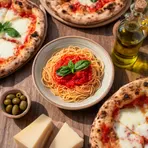
The diverse food culture in Italy celebrates regional specialties and traditional cooking methods.
Synonyms
 112
3.9
112
3.9
A style of cooking typical of a country or region
 3
7.0
3
7.0
A way of preparing and enjoying good food in a region's style
 2
3.6
2
3.6
Dishes and cooking styles typical of a place


 1
7.5
1
7.5
Customs about how a community cooks, eats, and shares food
How Widespread
1
3.5
 2
3.6
2
3.6
Surface Forms
Morphology
The meaning 'customs and practices related to food' is compositionally derived from 'food' (what is eaten) + 'culture' (shared customs and practices). This noun–noun combination is semantically transparent and cross-linguistically common, so a B1 learner who knows both constituents will readily infer the MWE's meaning.
Etymology
Food culture comes from the simple idea that food (what people eat) and culture (shared habits) go together: imagine families, markets, and festivals where recipes and ways of eating are passed down. That's why the phrase means the 'customs and practices' around food in a place.