
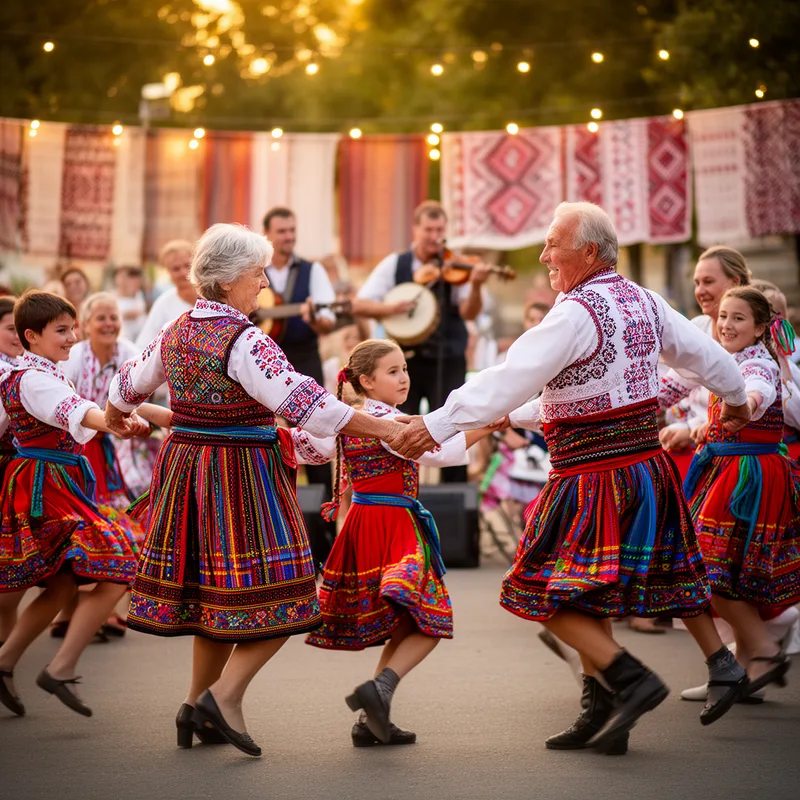
folk dancing
- noun
- /foʊk ˈdænsɪŋ/
- At the summer fair, traditional folk dancing was performed, showcasing the heritage of the town.
Examples
-
The local community center offers classes for anyone interested in learning folk dancing from various cultures.
-
During the festival, everyone enjoyed watching the lively folk dancing that celebrated the region's traditions.
-
At the Coral Beach Hotel, we watched several Malaysian games in progress as well as a mock Malaysian wedding ceremony with graceful Oriental folk dancing.
Academic text (1995)
Synonyms
 1
2.8
1
2.8

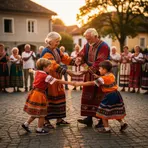
A dance from a community that people learn from their grandparents
 1
2.7
1
2.7
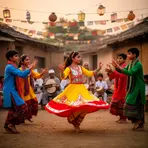
A traditional dance from a region that tells local stories
How Traditional


Surface Forms
Morphology
The meaning 'a style of dancing traditional to a community' is directly derivable from combining 'folk' (people of a community/traditional) with 'dancing' (rhythmic movement to music). This compositional noun–noun phrase follows a transparent, cross-linguistically common pattern, so a B1 learner who knows both words would readily understand the MWE.
Etymology
The noun folk dancing comes from ordinary people dancing together at local events: folk means common people and dancing is moving to music. These simple community dances were passed down in families and villages, so today folk dancing means 'traditional dances' of a region or community.