
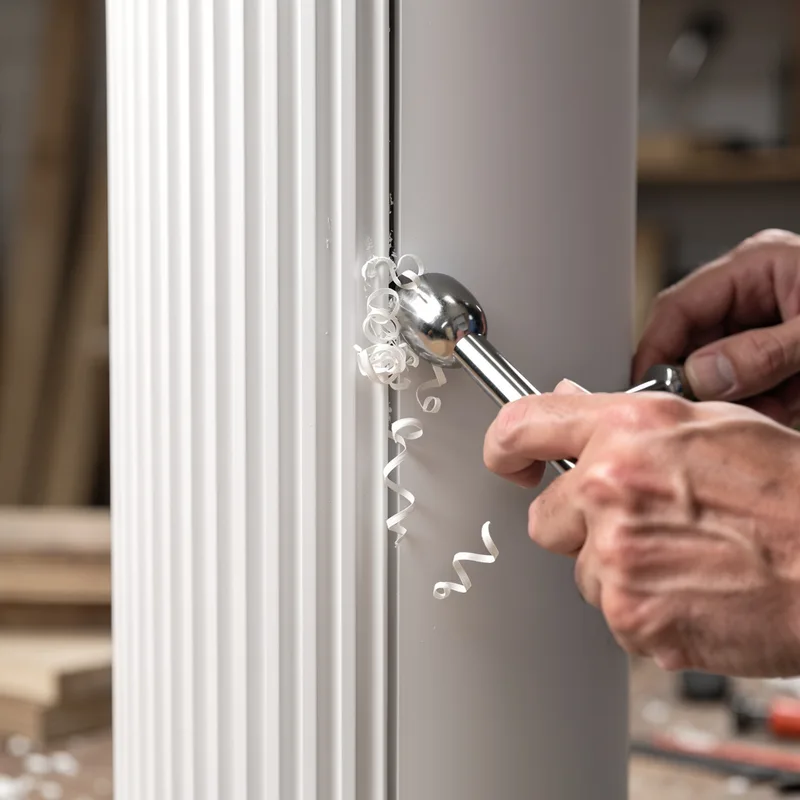
to flute
 5
8.4
5
8.4

- verb
- /fluːt/
- Specialized
- Her house was one of the biggest in Middletown, an old-fashioned two-story building with fluted columns, like a colonial mansion.
- a fluted column
- a fluted point
Examples
-
Thirteen floors of stone with sharp cornices, false architraves, and fluted pilasters.
Fiction book (2001) -
Each of them held a fluted glass with something in it.
Fiction book (1993) -
The bedroom roofs fan out like a fluted fruit bowl.
Fiction book (2001) -
Each instrument consists of a handle, a fluted metal shaft, and a semicylindrical business end.
Academic text (1993) -
Under the shade of the trees stood a plantation house with tall fluted columns of white pine.
Fiction book (1998) -
In the garden, the lettuce holds the dew in its fluted depths.
Fiction book (1990) -
The structure was tall and slender, fluted, buttressed, and absolutely ravishing.
Fiction book (2002) -
The guest room was small and daintily decorated, with ruffles and fluted lampshades, handmade quilts, and woven rugs.
Fiction book (1992) -
Fold in the dough that extends over the edges and flute the edges to form a border.
-
To create a decorative pattern on the pastry, you should flute the edges using your fingers.
Synonyms


Compounds




- Specialized
A modern metal flute with keys designed by Theobald Boehm played by blowing across a side hole

- Specialized
A common concert wind instrument played by blowing across a hole tuned to C and used in orchestras





- Specialized
A drill bit with straight grooves along its length that remove small rock pieces

A tube wind instrument held vertically with finger holes that you blow into through a whistle mouthpiece

- Specialized
A metal or wooden instrument held sideways and played by blowing across a hole used in orchestras and bands
How Deep

Surface Forms
Etymology
To flute something means to make long, narrow grooves, and this verb comes from the noun flute for those grooves, which was named after the musical flute because of the similar tube shape.