
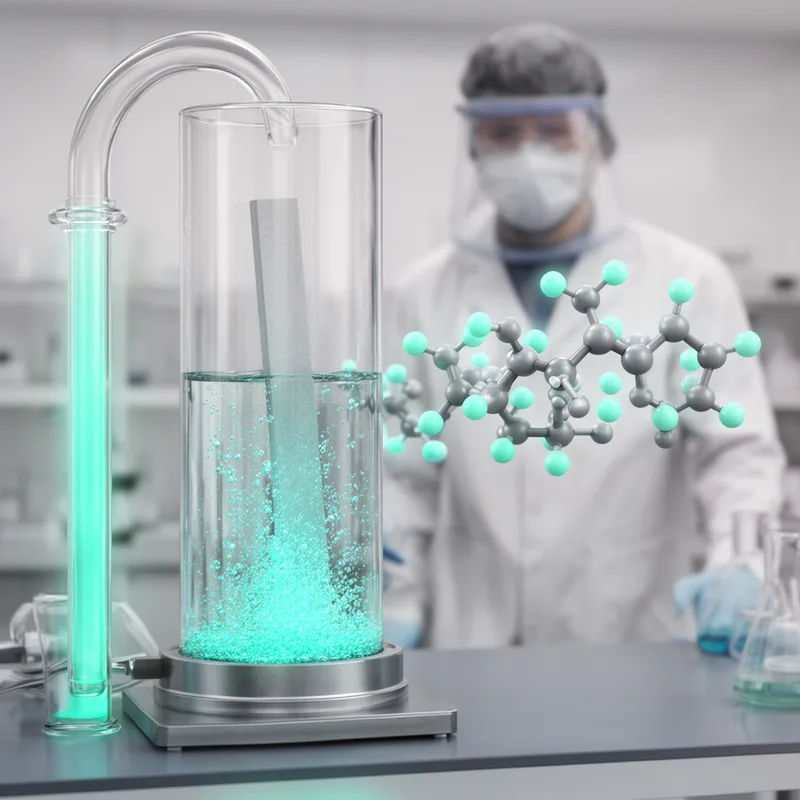
fluorination


 1
7.5
- noun
- /ˌflʊə.rɪˈneɪ.ʃən/
- Specialized
- During the experiment, we carefully monitored the fluorination process to ensure maximum efficiency.
- effect of fluorination
Examples
-
We used the nonfluorinated organic iodide 1-iodohexane to study the effect of fluorination on estrogenic effects compared with PFHxI.
Academic text (2012) -
The research showed that the fluorination of the compound improved its stability in harsh conditions.
-
Preliminary etch-rate results indicate that fluorination is accompanied by the loss of etch resistance 20.
Academic text (2001) -
We used a nonfluorinated hydrocarbon, 1-iodohexane (C-6), as the control to study the effects of fluorination on estrogenic effects.
Academic text (2012) -
In the screening assays, 1-iodohexane did not exert estrogenic effects, indicating that fluorination is an important structural feature for estrogenic activity.
Academic text (2012) -
Scientists often study the effects of fluorination to enhance the properties of various materials.
Surface Forms
Morphology
fluorination = fluorinate (transparent) = fluorine + ate + ion
The noun is a regular nominalization of the verb 'fluorinate' (itself 'fluorine' + '-ate'), so its meaning as the process of adding fluorine is directly predictable from its parts.
Etymology
Fluorination comes from the root fluor, which comes from an old word meaning 'to flow' and shows up in familiar words like fluid and fluoride (as in toothpaste). So fluorination means the process of adding fluorine to a material — putting that element into something, which is how the word is used today.