
fluorine
 6
7.1
6
7.1

- noun
- /ˈflʊəˌriːn/
- Specialized
- Fluorine is noxious..
- fluorine gas
- fluorine atoms
- fluorine, chlorine
Examples
-
Among the four halogens, fluorine is the most electronegative and iodine the least.
Academic text (2012) -
Because of these hindrances, not much of the element fluorine is found and used today.
Blog text (4) -
Carbon-fluorine bonds are highly resistant to degradation.
Academic text (2015) -
Fluorine reacts with the moisture in the air to produce hydrogen fluoride.
Academic text (1993) -
Removing the uranium from the blanket salt is relatively straightforward: simply bubbling fluorine gas through the salt will convert UF4 salt to gaseous UF6.
Academic text (2010) -
Fluorine is a fluorine gas that can cause severe burns upon contact with skin.
-
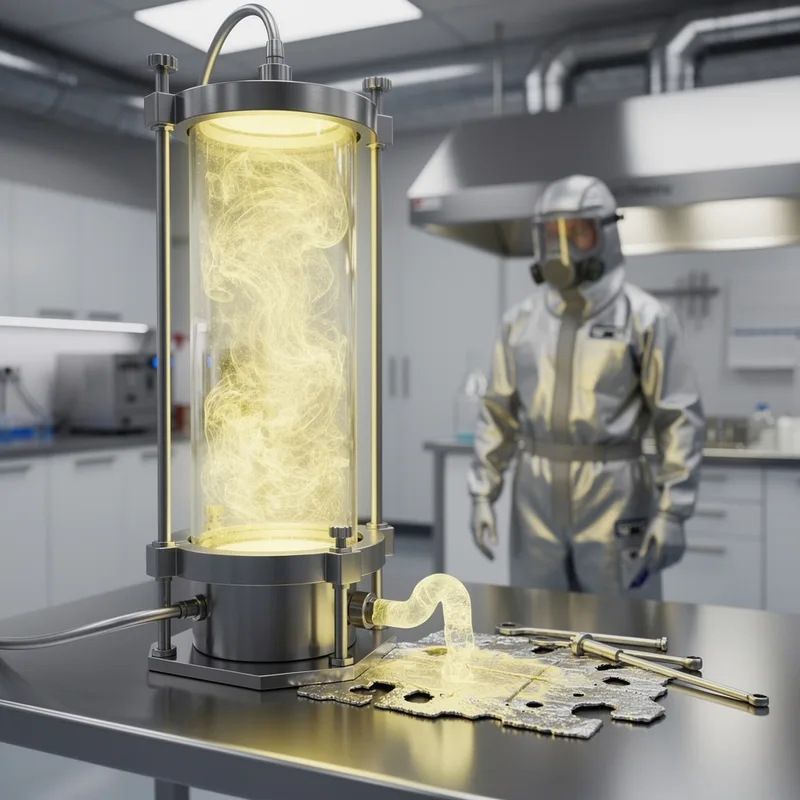
In its gaseous state, fluorine has a pale yellow color and a strong, pungent odor.
-
Many industries rely on fluorine for the production of high-performance plastics and refrigerants.
Surface Forms
Etymology
Fluorine gets its name from the mineral fluorite, which comes from the Latin word fluere meaning 'to flow' because people long ago used the mineral to help metal melt and flow in furnaces. So fluorine is named after that mineral and now refers to the very reactive element we know today.