
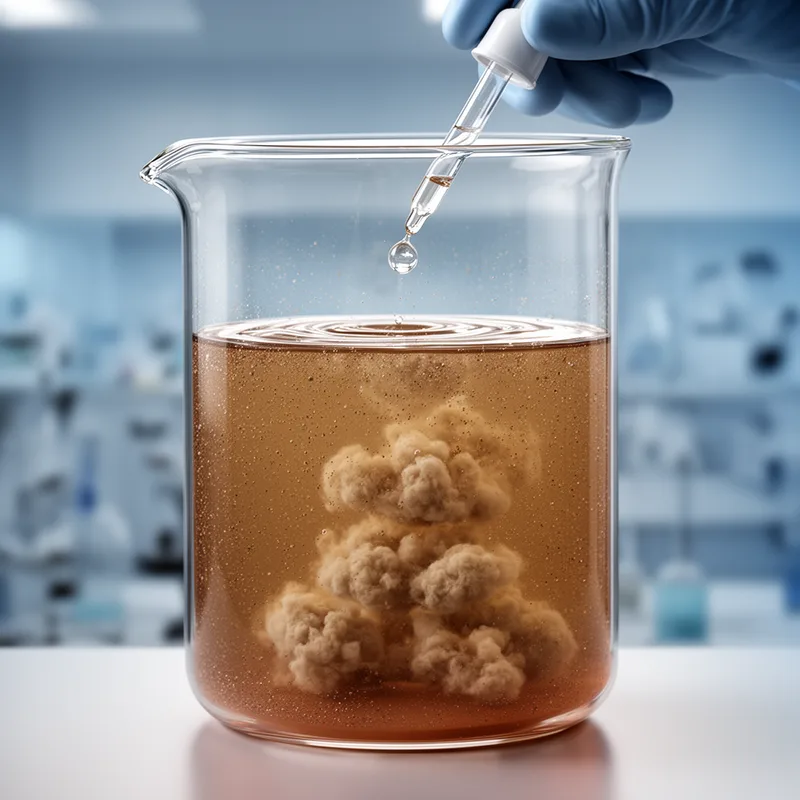
flocculant
9.9
Causes small bits in water to join into larger lumps
- adjective
- /ˈflɒkjʊlənt/
- Specialized
:
floculante
- The water then moves into the maturation tank for further mixing that allows the sand and flocculant particles (floc) to join together before passing into the settling tank.
Examples
-
The flocculant added to the water helped the fine particles to clump together.
-
Using a flocculant improves the efficiency of the filtration process.
-
The flocculant causes tiny impurities in the liquid to form larger clusters.
Antonyms
How Flocculant


Surface Forms
flocculant positive
Morphology
flocculant = flocculate (transparent) = floccul + ant
Formed by adding the agent/adjectival suffix '-ant' to the verb 'flocculate', so the meaning 'causing to form flocs' follows directly.
Etymology
Flocculant comes from the old Latin floccus meaning 'tuft' or a small lock of wool, and the part floc- is like the familiar English word flock. So a flocculant (adjective) describes something that makes tiny particles come together into clumps or 'flocs', like loose fibers forming a small tuft.