
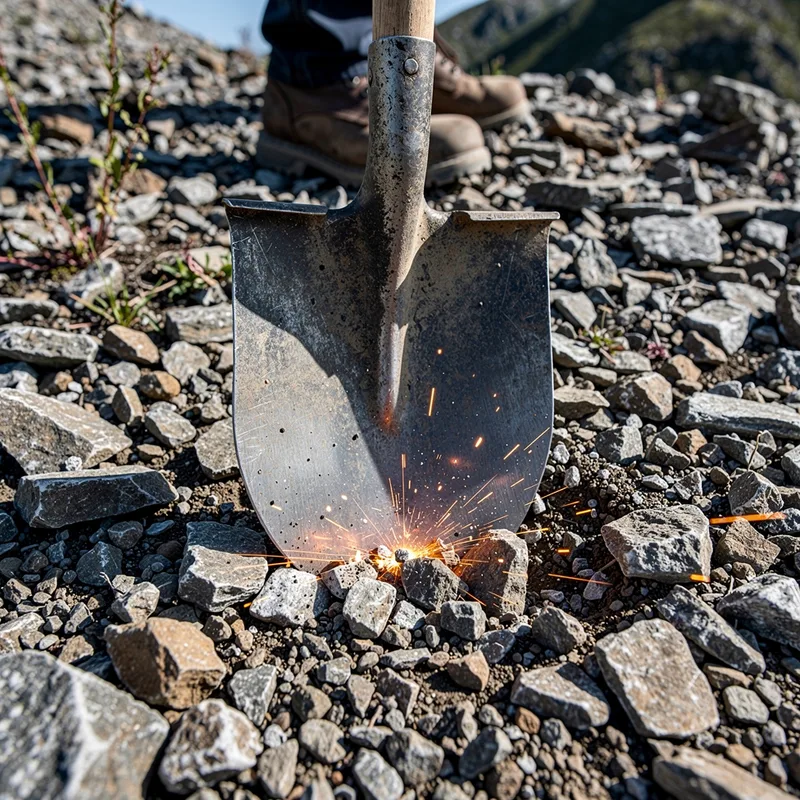
flinty
 1
8.1
1
8.1

- adjective
- /ˈflɪnti/
- The construction workers had to break through the flinty rock before they could dig the foundation.
- flinty-eyed
- flinty eyes
- flinty soil
Examples
-
Pieces of the car eventually broke free and bounced along the flinty ballast of the rail bed with a sound like a brass band before tumbling to rest in the weeds.
Fiction book (1999) -
The meadow stones glowed white-green, and a flinty wind worked over the meadow, scraped the fire low, then ruffled it into yellow silk sashes.
Fiction book (2000) -
His mother's face was white, almost flinty.
Academic text (1992) -
You are all here because you do not know how to dig into the flinty soil of China and discover its revolutionary future.
-
I looked around at the flinty mountains, unimpressed.
Fiction book (1994) -
Craddock gave it his narrow, flinty-eyed stare.
Fiction book (1993) -
The church was one of those towered East Anglian flinty bastions.
Fiction book (1998) -
An older man sat down next to him, a well-groomed, professorial type with longish, silver-white hair and dark, flinty eyes peering over his half-glasses.
Fiction book (1995) -
Nay, they’re trashing the 82-year-old with a dry-cool wit, an Oscar, and a flinty stare.
Blog text (9) -
The hiker struggled to walk on the flinty path, which was dotted with sharp stones.
Compounds


How Hard

Surface Forms
Morphology
Etymology
Flinty comes from flint plus -y, with flint meaning a hard stone and -y making it mean 'full of' or 'made of'. So flinty describes land or things that are like flint—very hard, rocky, and unyielding.