
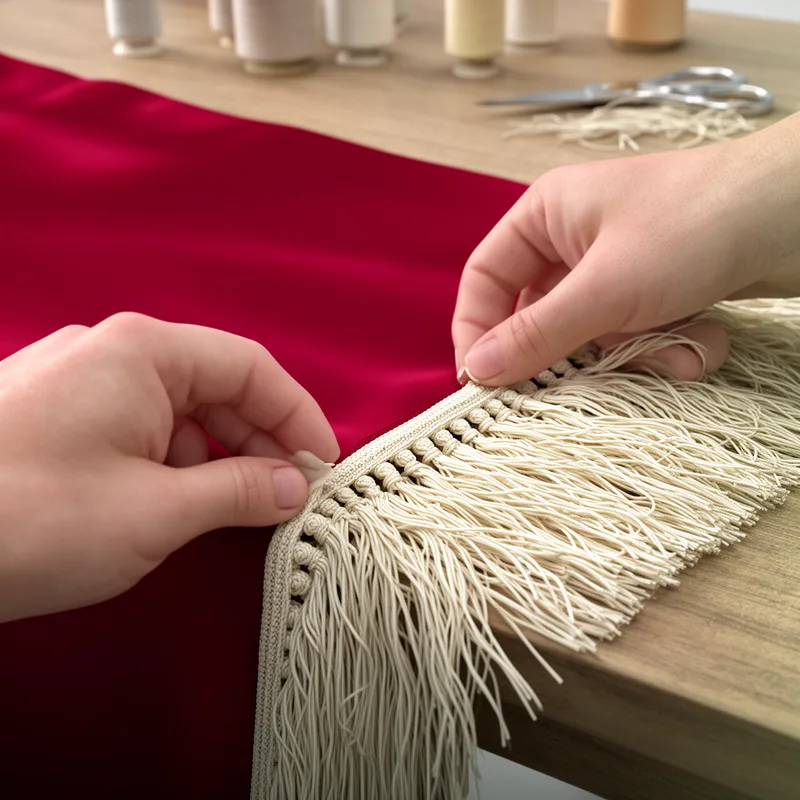
to fimbriate
- verb
- /ˈfɪmbriˌeɪt/
- Specialized
- The designer fimbriated the curtains to give them a more decorative appearance.
Examples
-
The artisan fimbriated the fabric's edge to create a soft fringe for the ceremonial sash.
-
Ancient garments were often fimbriated to signify status or rank.
-
The artist fimbriates the canvas with delicate threads.
-
She loves to fimbriate her fabric creations.
-
The artisan fimbriated the fabric's edge to create a soft fringe for the ceremonial sash.
-
The designer fimbriated the curtains to give them a more decorative appearance.
-
The artist fimbriated the canvas with delicate threads.
Synonyms
 1
5.8
1
5.8

To add a decorative edge of hanging threads or tassels to something
How Fringed

Surface Forms
Morphology
fimbriate = fimbri + ate
The verbal/adjectival formation uses the Latin stem 'fimbri-' plus '-ate'; the stem is not a familiar English word, so the meaning 'to edge with a fringe' is not transparently derivable for most learners.
Etymology
The verb fimbriate comes from the Latin fimbria 'fringe' and also links to the English word fringe. To fimbriate something is simply to add a thin, threadlike border or fringe to its edge, like decorating a fabric or curtain.