
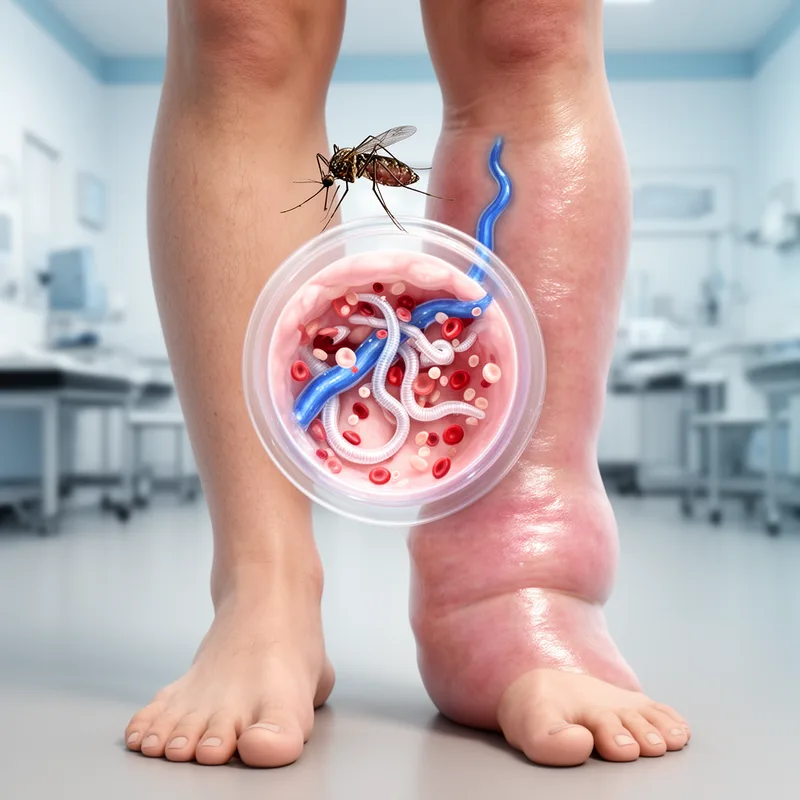
filarial


 1
9.9
- adjective
- /fɪˈlɛəriəl/
- Specialized
- filarial nematode
Examples
-
In contrast, the IL-4/IL-13-polarized macrophages found in the thoracic cavity of mice infected by the filarial nematode.
Academic text (2016) -
Another hypothesis involves filarial parasites whose endosymbiotic bacteria, Wolbachia, are released upon parasite death and can also lead to acute inflammatory disease.
Academic text (2007) -
In Ethiopia and other parts of Africa, it should be noted that TOMS is focusing on giving to youth at high risk for contracting podoconiosis (non-filarial elephantiasis occurring below the knee).
Blog text (29) -
Filarial infections can cause severe health problems if left untreated.
-
The doctor prescribed medication to treat the child's filarial disease.
-
Research on filarial worms helps scientists understand how to combat these parasites.
Synonyms
 1
7.2
Caused by tiny animals that live on another animal or person and harm them
Relating to worms that live in people or animals and cause disease
Surface Forms
Morphology
Etymology
The word filarial comes from filaria, which comes from Latin filum meaning 'thread', and you can see the same root in filament. Because the worms are thin and thread-like, filarial describes diseases caused by those parasites.