
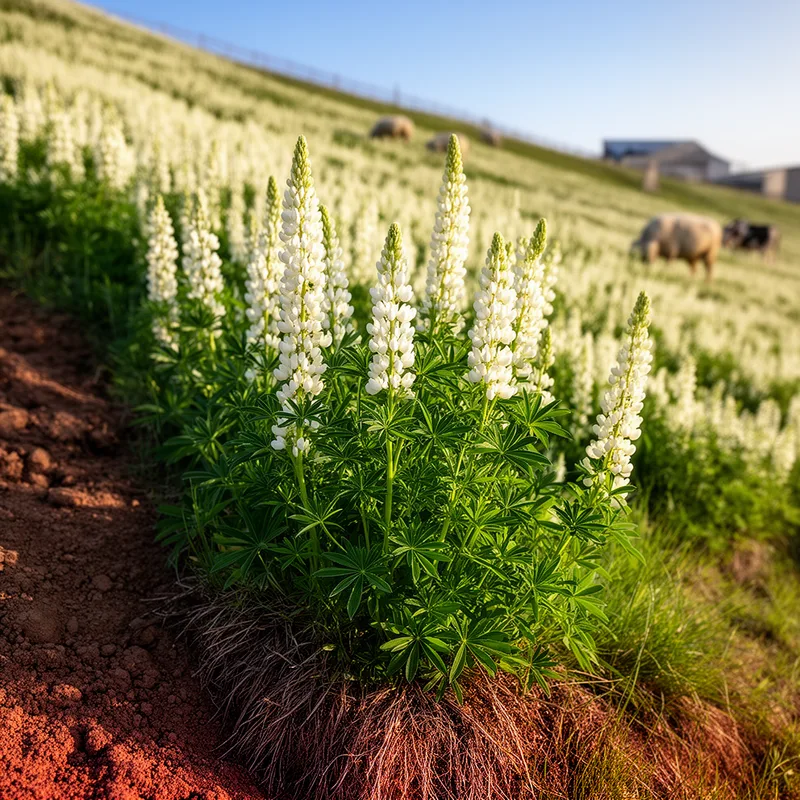
field lupine
- noun
- /fiːld ˈluːpaɪn/
- She admired the delicate white blossoms of the field lupine in the meadow.
Examples
-
The farmer planted field lupine to restore nutrients to the soil.
-
Erosion along the hillside was controlled with dense patches of field lupine.
-
Look at that field lupine!
-
The field lupine is known for its beautiful white flowers.
-
To prevent soil erosion, the gardener decided to plant field lupine along the edge of the property.
-
In the spring, the fields were filled with beautiful white flowers of field lupine.
-
Farmers often use field lupine as forage due to its ability to enrich the soil.
Synonyms

A plant with white flowers grown to feed animals and stop soil erosion

A plant with white flowers grown to feed animals and stop soil from washing away

A plant with white flowers grown to feed animals and stop soil erosion

A plant with white flowers grown for animal feed and to stop soil erosion
Surface Forms
Morphology
This is a straightforward noun + noun composition where 'field' restricts the location or type of 'lupine', so the referent is simply a lupine found or grown in a field. The meaning is directly derivable from the constituents and follows common compound-noun patterns, so a B1 learner who knows both words would understand it.
Etymology
The name field lupine, made from the words field and lupine, is very literal: it means a lupine that grows in open fields. Farmers planted it to 'feed animals' and to 'stop soil washing away', so picture white flowers covering a field and helping the land.

