

Egyptian lupine
- noun
- The fields were covered in the white blossoms of Egyptian lupine each spring.
Examples
-
Farmers often plant Egyptian lupine to enrich the soil with nitrogen.
-
Egyptian lupine is recognized for its effectiveness in controlling soil erosion.
-
The Egyptian lupine grows well in poor soil.
-
Farmers often plant Egyptian lupines for animal forage.
-
Egyptian lupine is recognized for its effectiveness in controlling soil erosion.
-
The fields were covered in the white blossoms of Egyptian lupine each spring.
-
Farmers often plant Egyptian lupine to enrich the soil with nitrogen.
Synonyms

 3
8.4
3
8.4

A plant with tall spikes of purple or blue flowers

A plant with white flowers grown to feed animals and stop soil from washing away
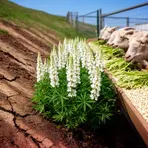
A plant with white flowers grown to feed animals and stop soil erosion

A plant with white flowers in the pea family that people grow for animal food and to stop soil erosion

A plant with white flowers grown for animal feed and to stop soil erosion
Surface Forms
Morphology
The meaning is directly compositional: 'Egyptian' specifies origin/variety and 'lupine' names the plant, so a learner who knows both words can infer it is a lupine associated with Egypt or an Egyptian variety. This adjective + noun pattern is a standard, cross-linguistic way to form names and is predictable for B1 learners.
Etymology
Egyptian lupine joins Egyptian (where it was long grown) and lupine, a word from an old term for 'wolf'. People once thought the plant 'ate' poor soil like a wolf, but it actually holds soil and adds nutrients, so the name helps remember this white herb used to stop erosion and feed animals.