
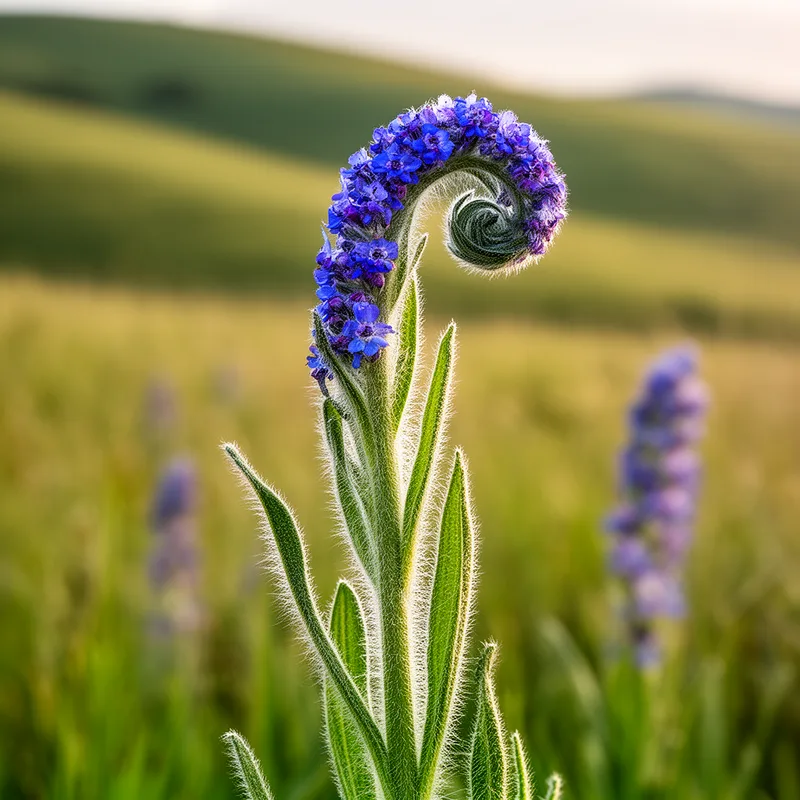
fiddleneck
- noun
- /ˈfɪd.əl.nɛk/
- US
 :
fiddleneck
:
fiddleneck
- We spotted a patch of fiddleneck along the trail, its delicate flowers spiral like the neck of a violin.
Examples
-
Farmers often watch for fiddleneck in their pastures, as some species can be toxic to livestock.
-
The fiddleneck blooms beautifully in the spring.
-
The hills were covered in fiddleneck during the spring, their twisted blooms creating a sea of color.
-
Have you seen a fiddleneck in the garden?
-
The fields were filled with vibrant fiddleneck flowers dancing in the breeze.
-
During spring, the fiddleneck blooms create a stunning display of blue and lilac along the hillsides.
-
In California, hikers often stop to admire the beautiful clusters of fiddleneck blossoms.
Synonyms

A hairy plant that lives one year with many blue or purple flowers that attract bees

An annual plant with large coiled flower spikes that grows in the western United States and is threatened
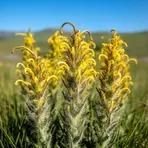
A group of rough plants with curved flower spikes called fiddlenecks that come from Europe and the Americas
Compounds
- Specialized
An annual plant with large coiled flower spikes that grows in the western United States and is threatened
Surface Forms
Morphology
Etymology
The word fiddleneck comes from the plant's coiled flower cluster that looks like the fiddle 'neck' of a violin, so the plant was named for its shape.

