
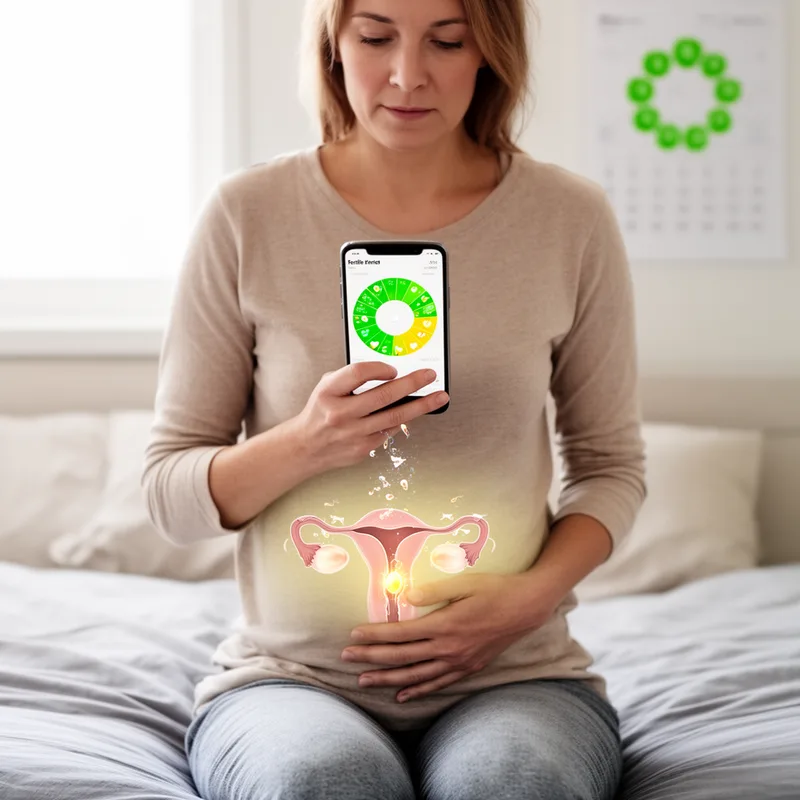
fertile period


 1
4.6
1
4.6
- noun
- Understanding your fertile period can help you plan for pregnancy more effectively.
- abstain during the fertile period
- determine their fertile period
- the most fertile period
Examples
-
Abstaining during the woman's fertile period would be a lack of faith; therefore, the couple should not expect to receive God's protection for the woman's health.
Blog text (11) -
In this case, what happens is that women dress more provocatively at the maximally fertile period of their menstrual cycles.
Academic text (2013) -
As for your question, don't have sex during fertile periods.
Blog text (11) -
The reason it started to change was that the mid-1980s were a very fertile period for trade policy and trade negotiations in general.
Academic text (2000) -
A whole fertile period.
-
It would certainly work a great deal better if men didn't have sex during their fertile periods.
Blog text (11) -
During the fertile period, the chances of conception are estimated to be between 10% and 33%, but there is a 3% risk of pregnancy from one unprotected act of sexual intercourse at any time during the menstrual cycle.
Academic text (2011) -
NFP involves avoiding intercourse during a woman's fertile period—a not very effective form of birth control.
Academic text (1992) -
The fertile period typically occurs around the time of ovulation, increasing the chances of conception.
-
Many couples try to conceive during the woman's fertile period to increase their likelihood of success.
Synonyms
A time in a woman's monthly cycle when she is most likely to become pregnant
Surface Forms
Morphology
The meaning is directly compositional: 'fertile' (capable of producing offspring) combined with 'period' (a span of time) yields 'the time when fertility is highest,' so a learner who knows both words can infer the phrase. This adj+noun construction is cross-linguistically common and context typically resolves any minor ambiguity with 'period' (time span vs. menstrual bleeding).
Etymology
Fertile period uses fertile like rich soil that grows plants and period to mean a short time; one popular image is planting seeds in good ground. This picture explains the meaning: it refers to the days when the body is most ready 'to get pregnant', so pregnancy is most likely.