

fatalistic
 7
7.9
7
7.9

- adjective
- /ˌfeɪtəˈlɪstɪk/
- She adopted a fatalistic outlook, believing that no matter what choices she made, her destiny was already sealed.
- fatalistic explanations
- fatalistic lifestyle
- fatalistic view
Loading YouTube…
Watch on YouTubeNow, there are some people who do view things this way in a very fatalistic manner.
- Now, there are some people who do view things this way in a very fatalistic manner.
- I am of that mind because my wife is very much, she's so naturally healthy and I'm quite fatalistic about it.
- And I'm not sure if there's, it would be the perfect, the right word, but more fatalistic.
- One is the the somewhat kind of almost a fatalistic argument that take the whole self worth thing out of it.
Examples
-
And France Joseph grew more fatalistic in outlook.
-
Due to our numbers, our interchangeability, and our ease of reproduction, we are quite fatalistic about individual life.
Fiction book (1991) -
Now, there are some people who do view things this way in a very fatalistic manner.
-
Their children are also more likely to be fatalistic about obstacles they face, in and out of school.
Academic text (2006) -
Life is part of what happens to you, which represents a more fatalistic orientation.
Academic text (2004) -
Subtle and complex, he is a loner with a fatalistic view of life.
Academic text (1992) -
But you can't be fatalistic about it and sort of blame your entire station in life on, you know, deterministic events.
-
Other Qur'anic verses, however, contradict a fatalistic outlook by calling for personal responsibility.
Academic text (2015) -
Older participants preferred fatalistic (Factor 2), individualistic (Factor 3), and tangible structural explanations (Factor 5).
Academic text (1997) -
Yet, the emerging evidence suggests that assimilation for Native Americans is fatalistic (Bryde, 1970; Garcia, 1991; Nel, 1994).
Academic text (1996)
Synonyms

Relating to the belief that events are already decided and cannot be changed
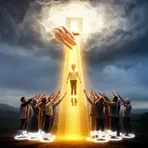
Relating to the belief that God decides who will be saved and people cannot change it
How Fatalistic

Surface Forms
Morphology
Etymology
Fatalistic comes from the root fate, which means 'destiny'. That's why a fatalistic person believes events are fixed and that nothing they do can change the outcome.