
family Typhaceae
- noun
- Specialized
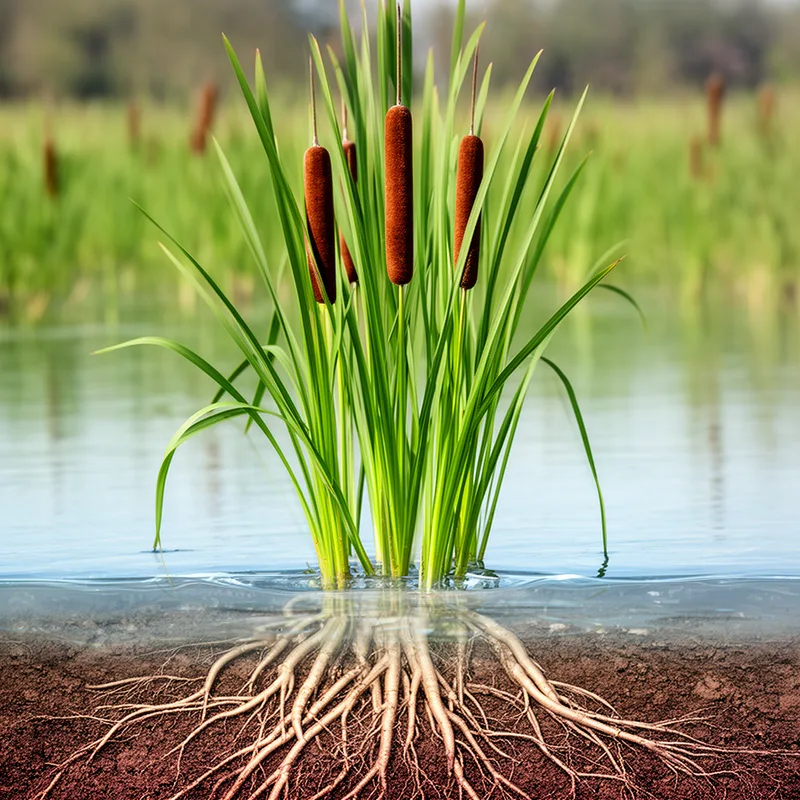
- The family Typhaceae includes plants such as cattails, which are common in marshy habitats.
Examples
-
The long, ribbon-like leaves are a key identifying feature of plants in the family Typhaceae.
-
Many wetland restoration projects feature species from the family Typhaceae due to their ecological value.
-
The family Typhaceae includes various species of cattails.
-
Did you know that the family Typhaceae thrives in wetland areas?
-
Many wetland restoration projects feature species from the family Typhaceae, which play a significant role in maintaining ecological balance.
-
Plants in the family Typhaceae, like cattails, are essential for providing habitat in marshy areas.
-
The long, linear leaves of the plants belonging to the family Typhaceae are adapted to thrive in wetland environments.
Synonyms

A group of plants that grow in wet places like cattails with long leaves and roots that spread

A group of tall marsh plants like cattails with long leaves and brown flower spikes
Surface Forms
Morphology
The phrase denotes the taxonomic group named Typhaceae, so its meaning follows directly from 'family' (a scientific grouping) plus the name 'Typhaceae' (a group of marsh plants). This is a straightforward compositional, cross-linguistically common naming pattern, so a learner who knows both constituents can infer the meaning.
Etymology
Family Typhaceae comes from the plant name Typha, the marsh 'cattails' with tall stems and brown, sausage-shaped flower heads. So the name means the family of wetland plants that look like those cattails.

