
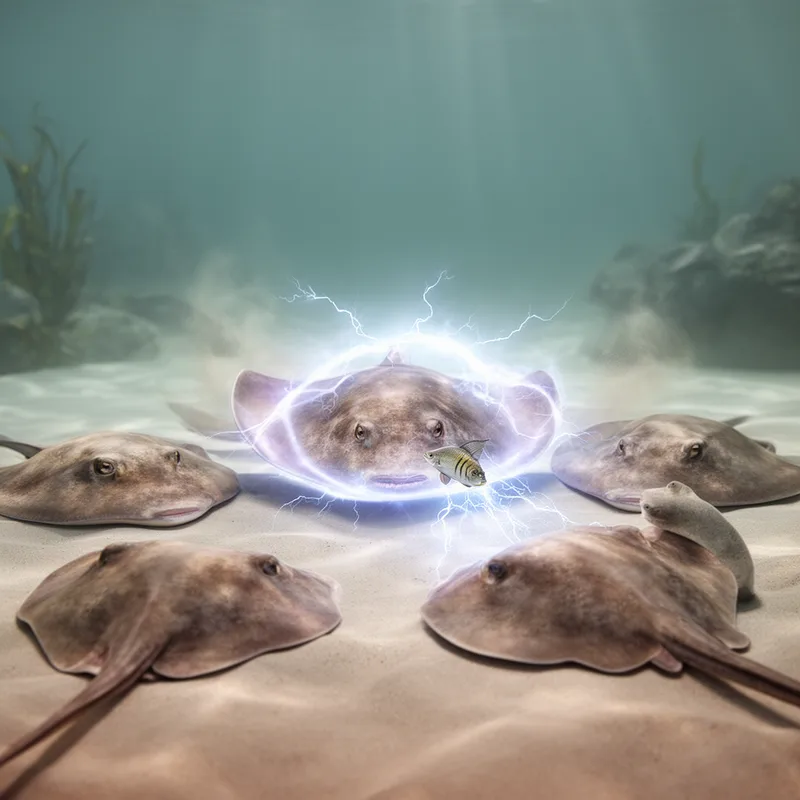
family Torpedinidae
- noun
- Specialized
- The family Torpedinidae includes several species capable of generating electric shocks.
Examples
-
The unique defense mechanism of the family Torpedinidae has fascinated marine biologists for decades.
-
The family Torpedinidae includes several species of electric rays.
-
Scientists discovered a new member of the family Torpedinidae off the Mediterranean coast.
-
Many members of the family Torpedinidae are found in tropical waters.
-
The family Torpedinidae is known for its members that can deliver powerful electric shocks to potential predators.
-
Researchers are studying the family Torpedinidae to better understand how these electric rays use electricity for hunting and defense.
-
In the family Torpedinidae, the electric rays demonstrate a remarkable adaptation for navigating their marine environments.
Synonyms
Fish that live in the sea and use electric shocks to catch food or defend themselves
How Broad


Surface Forms
Morphology
The phrase is fully compositional: 'family' (a scientific grouping) combined with the taxonomic name 'Torpedinidae' (electric rays) yields the meaning 'the family of electric rays.' This follows standard, cross-linguistic taxonomic naming conventions, so a B1 learner who knows both constituents would readily infer the MWE's meaning.
Etymology
Family Torpedinidae comes from an old Latin word that gave us torpedo, which meant 'to be numb'. People used this name because these flat rays can give electric shocks that stun or numb other animals, so the name helps you remember that this family includes electric rays that produce shocks.