
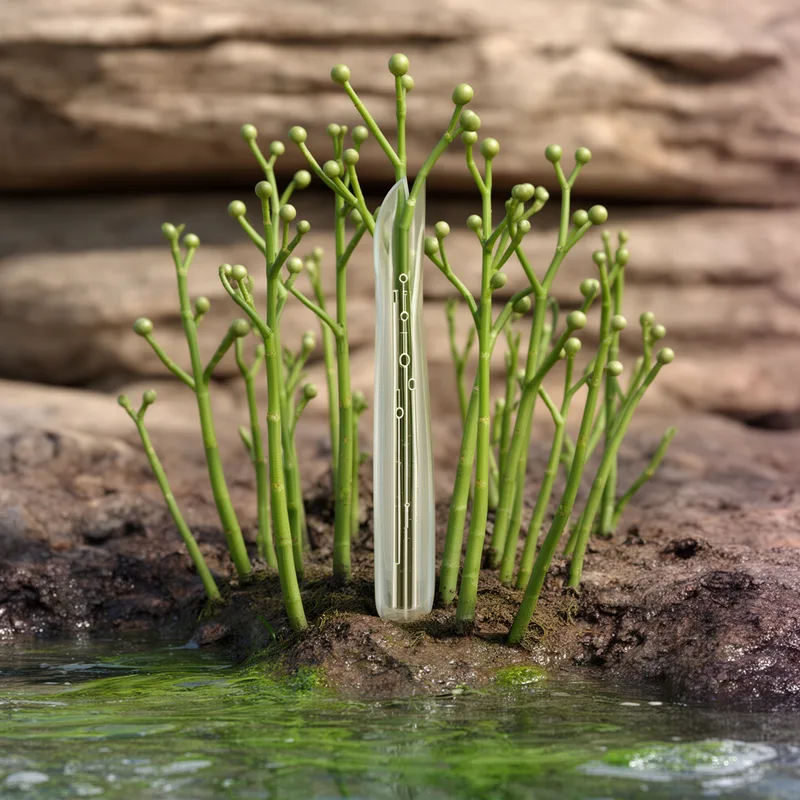
family Psilophytaceae
- noun
- Specialized
- The family Psilophytaceae includes some of the earliest known vascular plants from the Paleozoic era.
Examples
-
Fossils of the family Psilophytaceae have contributed greatly to our understanding of plant evolution.
-
Scientists often study the family Psilophytaceae to learn about the transition of plants from water to land.
-
The family Psilophytaceae thrived during the Paleozoic era.
-
Many fossils from the family Psilophytaceae have been discovered.
-
Fossils of the family Psilophytaceae provide important insights into the evolution of early land plants.
-
The family Psilophytaceae represents some of the first vascular plants that adapted to life on land.
-
Researchers have uncovered numerous fossils from the family Psilophytaceae that date back to the Paleozoic era.
Synonyms

A group of extinct leafless plants with tubes that carry water that lived a very long time ago
Surface Forms
Morphology
family + Psilophytaceae
This is a literal taxonomic noun phrase: 'family' (a scientific grouping) combined with a proper taxon name, so a learner who knows 'family' and recognizes Psilophytaceae as a name can infer it denotes a biological family. The family + taxon-name composition is cross-linguistically common and compositional, making the overall meaning transparent even if the specific name is unfamiliar.
Etymology
Family Psilophytaceae comes from the Greek parts psilo meaning 'bare' and phyte meaning 'plant', because these very early land plants had simple, leafless stems. Picture a small, bare stem reaching up from the ground; that image helps you remember they were among the first plants to live on land.

