
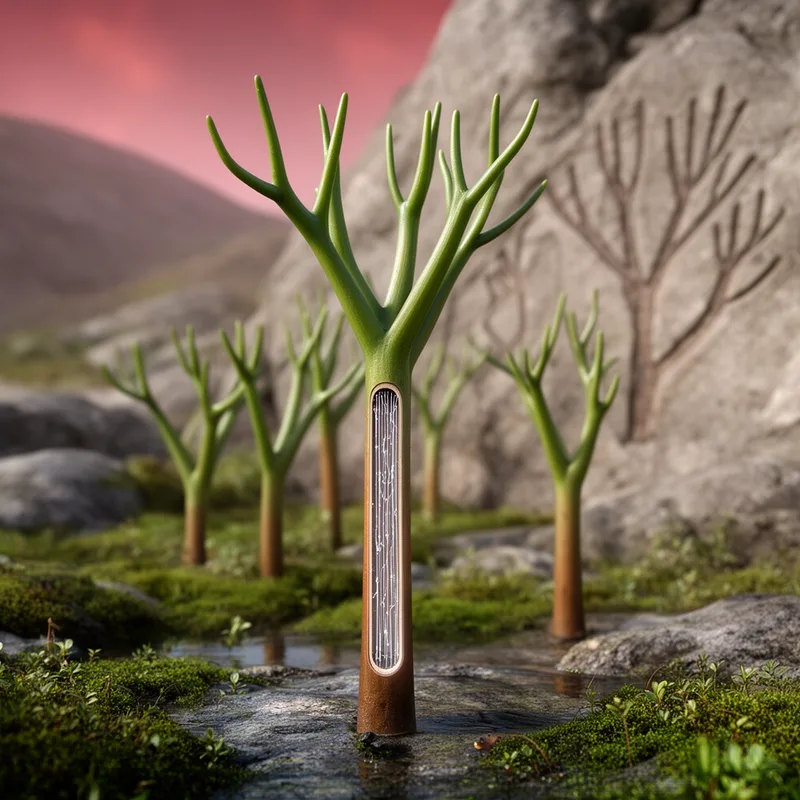
Psilophytaceae
- noun
- /ˌsaɪləˈfaɪtəˌsi/
- Specialized
- Fossil records suggest that Psilophytaceae were among the earliest vascular plants to colonize land.
Examples
-
The simple structure of Psilophytaceae makes them important for understanding plant evolution.
-
Many genera within the Psilophytaceae family are known only from Devonian-aged rock formations.
-
The Psilophytaceae family thrived during the Devonian period.
-
Are Psilophytaceae related to modern plants?
-
Fossil records suggest that Psilophytaceae were among the earliest vascular plants to colonize land.
-
The simple structure of Psilophytaceae makes them important for understanding plant evolution.
-
Many genera within the Psilophytaceae family are known only from Devonian-aged rock formations.
Synonyms
An extinct family of very early land plants with tubes for moving water
Surface Forms
Morphology
Psilophytaceae = psilophyt + aceae
This is a botanical Latin family name formed with the specialized suffix '-aceae' attached to a Latin/Greek combining form; the parts are not productive English morphemes that a B1 learner could use to infer the meaning.
Etymology
Psilophytaceae breaks down into parts: psilo- meaning 'bare' and phyte meaning 'plant', with the family ending -aceae meaning 'family'. So Psilophytaceae literally means a 'family of bare plants', a helpful image for remembering these simple, leafless plants that lived very long ago.

